
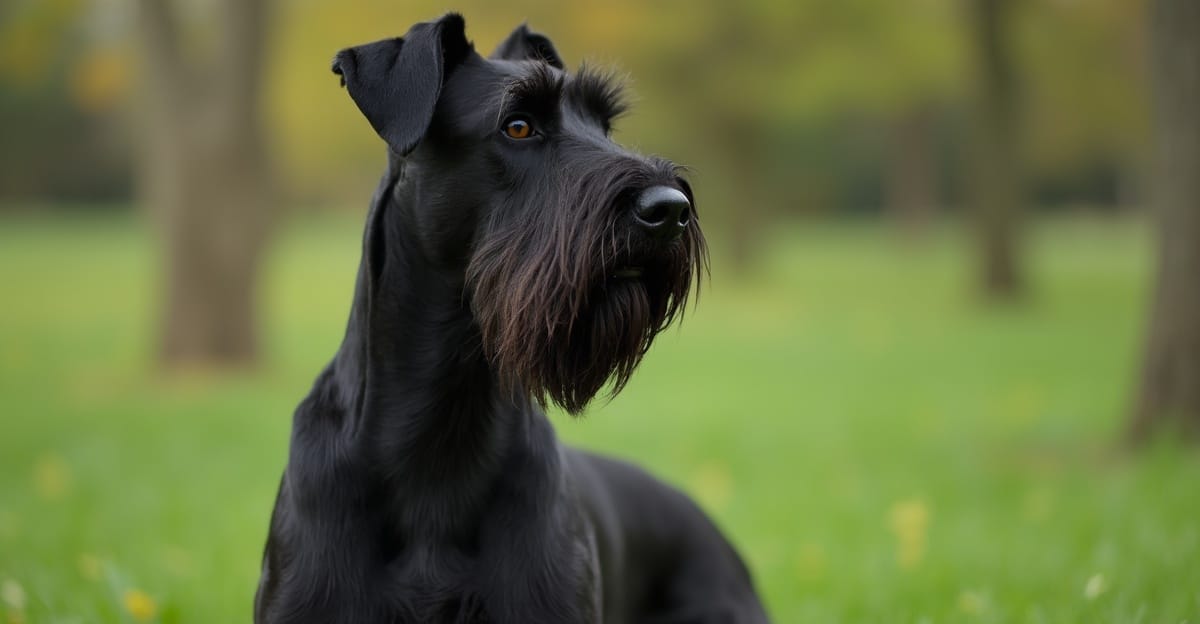
Training Your Giant Schnauzer: A Comprehensive Guide
Your Giant Schnauzer’s piercing gaze and commanding presence might fool you into thinking training will be an uphill battle, but these German giants are actually among the most intelligent and eager-to-please breeds you’ll encounter. Originally bred as versatile working dogs, Giant Schnauzers possess an incredible capacity for learning that, when properly channeled, transforms them into exceptional companions. However, their combination of high intelligence, strong will, and boundless energy means that giant schnauzer training requires a strategic approach tailored to their unique temperament. Understanding their natural instincts and behavioral tendencies is the first step toward building a strong, trusting relationship with your Giant Schnauzer that will serve you both throughout their 12-15 year lifespan.
Table of Contents
Key Takeaways
- Giant Schnauzers are highly trainable but require consistent, positive reinforcement methods due to their intelligent and sometimes stubborn nature.
- Early socialization and puppy training are crucial for Giant Schnauzers to manage their guarding instincts and high energy levels effectively.
- Addressing common Giant Schnauzer behaviors like barking and digging requires understanding their breed-specific drives and providing appropriate outlets.
- Professional guidance can be invaluable for advanced training or managing complex behavioral challenges in Giant Schnauzers.
Quick Facts
| Size Category | Large |
| Origin | Germany |
| Hypoallergenic | no |
| Energy Level | very high energy |
| Trainability | highly trainable |
| breed common behavioral problems | common issues include excessive barking, digging, and guarding behavior |
| breed separation anxiety signs | signs may include destructive behavior, vocalization, and attempts to escape when left alone |
| breed training timeline weeks | 6-12 weeks for basic obedience training |
Understanding Giant Schnauzer Behavior
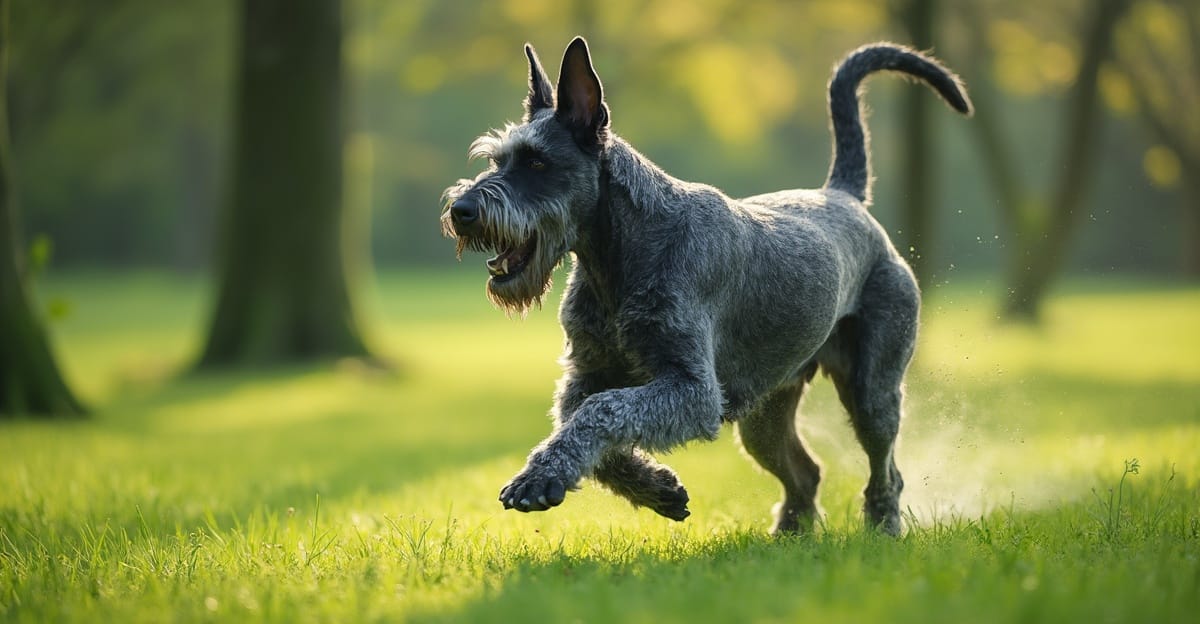
The Giant Schnauzer’s behavioral profile is deeply rooted in their working heritage as cattle drivers and estate guardians in Bavaria. This background has gifted them with an exceptional work ethic and problem-solving intelligence that makes them highly trainable, but also means they need constant mental stimulation to prevent boredom-induced mischief. Their very high energy levels aren’t just about physical exercise – these dogs crave mental challenges and purposeful activities that engage their sharp minds.
Natural Intelligence and Working Drive
Giant Schnauzers possess what trainers call ‘functional intelligence’ – the ability to learn quickly and adapt their behavior based on outcomes. This trait makes them excel at complex tasks and advanced training, but it also means they’ll quickly figure out ways to manipulate situations to their advantage if boundaries aren’t clearly established. Their working drive manifests as an intense focus when engaged in activities they find meaningful, whether that’s learning new commands, participating in dog sports, or simply having a job to do around the house.
Guarding Instincts and Socialization Needs
The breed’s natural guarding behavior stems from generations of selective breeding for protective qualities. While this makes them excellent watchdogs, it requires careful management through early socialization to prevent over-protectiveness or territorial aggression. Giant Schnauzers need to learn the difference between genuine threats and normal everyday situations, which is why exposing them to various people, animals, and environments during their critical socialization period is essential for balanced development.
Energy Management and Behavioral Outlets
The Giant Schnauzer’s very high energy level isn’t just about burning calories – it’s about channeling their mental and physical drives constructively. Without adequate outlets, this energy transforms into destructive behaviors like digging, excessive barking, or chewing. Understanding that their behavioral needs go beyond simple exercise helps owners create training programs that address both their physical stamina and their need for mental engagement through interactive play exercises and challenging activities.
How to Start Training a Giant Schnauzer Puppy

Beginning giant schnauzer training at 8 weeks old sets the foundation for a lifetime of positive interactions and mutual respect. The early weeks are crucial not just for basic obedience, but for establishing the trust and communication patterns that will make advanced training possible as your puppy matures. Giant Schnauzer puppies are like sponges, absorbing information about their world at an incredible rate, which makes this period both an opportunity and a responsibility for owners.
Critical Socialization Windows
The socialization period between 8-16 weeks is when your Giant Schnauzer puppy’s brain is most receptive to new experiences. During this time, positive exposure to different people, animals, sounds, textures, and environments literally shapes their neural pathways, influencing how they’ll react to these stimuli throughout their lives. Focus on quality over quantity – each interaction should be positive and controlled, allowing your puppy to approach new experiences at their own pace while building confidence rather than overwhelming them.
Foundation Commands and Communication
Starting with basic commands like ‘sit,’ ‘stay,’ ‘come,’ and ‘leave it’ establishes a communication system between you and your Giant Schnauzer. These aren’t just tricks – they’re safety tools and the building blocks for more complex training. Use positive reinforcement techniques consistently, rewarding immediately when your puppy responds correctly. Giant Schnauzers are food-motivated, but they also respond well to praise, play, and the satisfaction of completing tasks, so vary your rewards to keep training engaging.
Crate Training and House Rules
Crate training serves multiple purposes for Giant Schnauzer puppies: it aids in housebreaking, provides a safe space for rest, and helps prevent separation anxiety by teaching them that being alone is normal and comfortable. Choose a crate large enough for your puppy to stand, turn around, and lie down comfortably, but not so large that they can eliminate in one corner and sleep in another. Introduce the crate gradually, making it a positive space associated with meals, treats, and comfort rather than punishment or isolation.
What Are Effective Training Techniques?
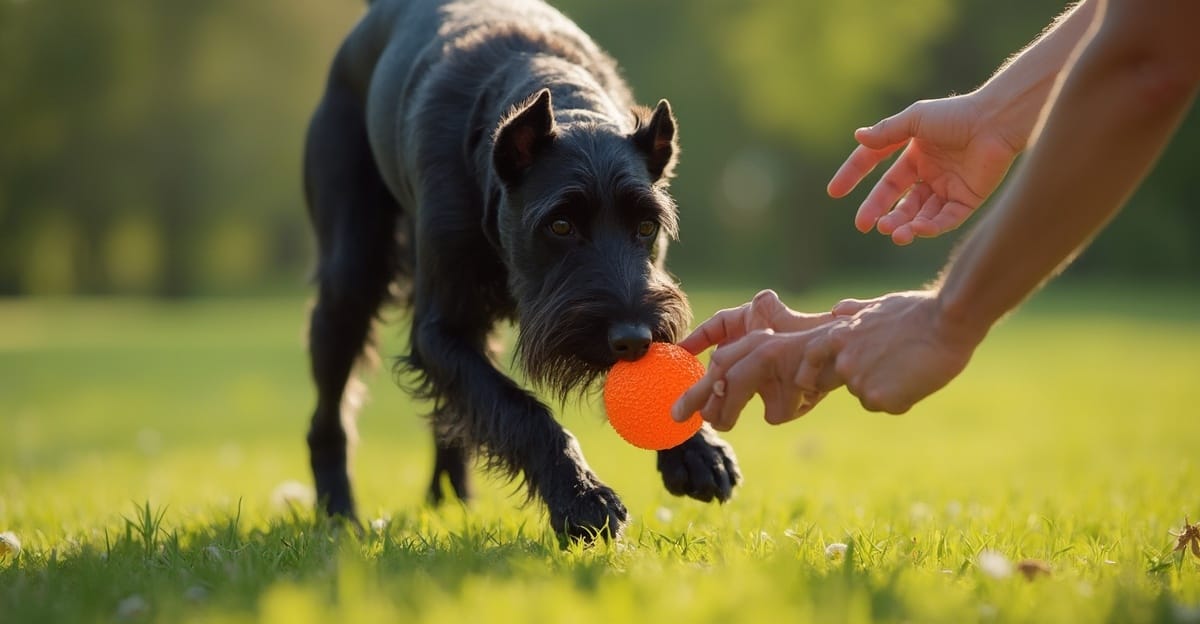
Successful giant schnauzer training relies on understanding what motivates these intelligent, strong-willed dogs and adapting your approach to work with their natural tendencies rather than against them. The most effective techniques combine mental stimulation with physical activity, creating training sessions that feel like engaging games rather than boring drills. Giant Schnauzers respond best to trainers who are confident, consistent, and creative in their approach.
Motivation and Reward Systems
Giant Schnauzers are highly food-motivated, but their intelligence means they quickly become bored with the same treats or rewards. Establish a hierarchy of rewards, using high-value treats like small pieces of chicken or cheese for new or challenging behaviors, and lower-value treats for well-established commands. Beyond food, these dogs are motivated by praise, play, and the opportunity to ‘work’ – many Giant Schnauzers will perform enthusiastically for the chance to carry objects, solve puzzles, or participate in activities that engage their problem-solving abilities.
Addressing Excessive Barking Solutions
Managing excessive barking requires understanding why your Giant Schnauzer is vocalizing. Alert barking is natural and often desirable, but persistent barking from boredom, anxiety, or over-excitement needs intervention. Teach a ‘quiet’ command by waiting for a natural pause in barking, immediately saying ‘quiet’ and rewarding the silence. Never yell at a barking dog – they often interpret this as you joining in the ‘alarm.’ Instead, redirect their attention to an incompatible behavior like sitting or performing a trick, then reward the calm, focused behavior.
Managing Guarding Behavior Through Training
Guarding behavior management starts with teaching your Giant Schnauzer that good things come from sharing and that you control resources. Practice ‘trading’ exercises where you offer something better in exchange for what they have, teaching them that giving up items leads to positive outcomes. Work on ‘wait’ commands before meals, toys, or attention, reinforcing that patience and deference to your leadership results in getting what they want. This approach builds trust while establishing healthy boundaries around resource guarding tendencies.
Is Positive Reinforcement Best for Giant Schnauzers?

Positive reinforcement techniques align perfectly with the Giant Schnauzer’s intelligent, sensitive nature, creating a training environment built on trust and mutual respect rather than fear or dominance. These dogs are emotionally complex – while they’re confident and strong-willed, they’re also deeply bonded to their families and can become shut down or resistant if training methods are harsh or punitive. The most successful giant schnauzer training programs focus on building the dog’s confidence while channeling their natural drives constructively.
Building Trust Through Reward-Based Methods
Giant Schnauzers form intense bonds with their handlers, and positive reinforcement strengthens these relationships by making training a collaborative effort rather than a battle of wills. When dogs learn that working with their handler leads to good outcomes, they become eager participants rather than reluctant subjects. This is particularly important for Giant Schnauzers because their size and strength mean that cooperation is essential – you cannot physically force a 75-pound dog to comply, but you can motivate them to choose compliance willingly.
Adapting Rewards to Individual Preferences
The intelligence that makes Giant Schnauzers excellent students also means they have individual preferences and personalities that affect their training. Some are highly food-motivated, others prefer play or praise, and many enjoy the mental stimulation of learning new skills for its own sake. Successful trainers learn to read their dog’s body language and energy levels, adjusting rewards and training intensity accordingly. Interactive play exercises can serve as both rewards and training opportunities, combining physical activity with mental engagement in ways that traditional treat-based training cannot match.
Long-term Benefits of Positive Methods
Positive reinforcement creates dogs who think and problem-solve rather than simply react to commands. Giant Schnauzers trained with these methods tend to be more confident, adaptable, and emotionally stable throughout their lives. They learn to offer behaviors and engage with their environment actively, which is particularly valuable for a breed prone to boredom and destructive behavior when under-stimulated. This approach also makes it easier to modify or expand training as the dog matures, since the foundation is built on communication and cooperation rather than compliance through intimidation.
How to Teach Your Giant Schnauzer the ‘Leave It’ Command
The ‘leave it’ command is one of the most valuable skills you can teach your Giant Schnauzer, potentially preventing everything from resource guarding issues to dangerous encounters with toxic substances during walks. This command teaches impulse control and deference to your judgment, skills that are particularly important for a breed with strong guarding instincts and high prey drive.
- Step 1: Start with a low-value treat in your closed hand. Present your fist to your Giant Schnauzer. When they sniff or lick, say ‘leave it’ and wait for them to back away.
- Step 2: The moment your Giant Schnauzer disengages from your hand, even for a second, immediately reward them with a high-value treat from your other hand, not the one they were trying to get.
- Step 3: Gradually increase the difficulty. Place a low-value treat on the floor, cover it with your hand, and repeat the ‘leave it’ command, rewarding for disengagement.
- Step 4: Once your Giant Schnauzer reliably leaves the covered treat, slowly uncover it for a brief moment. If they go for it, cover it again. Reward only when they ignore it.
- Step 5: Practice in various environments with different distractions. Ensure your Giant Schnauzer understands that ‘leave it’ applies to anything you don’t want them to interact with, like dropped food or unknown objects on walks.
Frequently Asked Questions
Are Giant Schnauzers easy to train?
Giant Schnauzers are highly intelligent and generally eager to please their owners, making them very trainable. However, their strong will and high energy require consistent, firm, and positive training methods. They thrive on mental stimulation and can become bored or stubborn if training is inconsistent or lacks engagement. Early socialization and puppy classes are crucial for harnessing their potential.
How long does it take to train a Giant Schnauzer?
Basic obedience training for a Giant Schnauzer puppy typically takes 6-12 weeks of consistent daily practice. However, training is an ongoing process throughout their lives, especially with a breed as intelligent and active as the Giant Schnauzer. Advanced training, behavioral modification for specific issues, and maintaining good manners will require continuous effort and engagement.
What are common Giant Schnauzer behavior problems?
Common behavioral problems in Giant Schnauzers include excessive barking, digging, and guarding behavior, often stemming from their natural instincts and high energy levels. If not properly socialized and exercised, they can also develop separation anxiety, leading to destructive chewing or vocalization. Early intervention and consistent training are key to managing these breed-specific tendencies.
Can Giant Schnauzers be trained to reduce barking?
Yes, Giant Schnauzers can be trained to reduce excessive barking. This requires identifying the triggers for their barking (e.g., strangers, other dogs, boredom) and teaching an ‘quiet’ command. Rewarding silence and providing sufficient mental and physical exercise to alleviate boredom are crucial. For persistent barking, consulting a professional trainer can provide tailored strategies.
Conclusion
Training your Giant Schnauzer successfully requires understanding their unique combination of intelligence, energy, and strong-willed nature. These remarkable dogs thrive with consistent, positive reinforcement methods that challenge their minds while building trust and cooperation. Early socialization and structured puppy training lay the groundwork for managing their natural guarding instincts and preventing common behavioral challenges like excessive barking and destructive tendencies. Remember that giant schnauzer training is an ongoing journey rather than a destination – their intelligence and energy levels mean they need continuous mental stimulation and engagement throughout their lives. While some owners may benefit from exploring giant schnauzer health problems or understanding how much does a giant schnauzer cost, the investment in proper training pays dividends in the form of a well-adjusted, confident companion. For those seeking additional guidance, professional trainers can provide valuable giant schnauzer training tips tailored to your specific situation and goals. See how the Giant Schnauzer’s trainability stacks up against similar breeds using our Pet Comparison Tool — compare behavior, intelligence, and care needs side by side.
Sources & References
⚠️ This article is for informational purposes only and does not replace professional veterinary advice. Always consult a qualified vet for your pet’s health needs.