From Fins to Feathers: Every Pet Decoded

Easily compare pets across breeds and species to understand their behavior, care needs, and lifestyle compatibility in seconds.
Breeds Covered
Traits Compared
No Signup
Results
Follow these 3 simple steps to compare pets and better understand which one fits you best
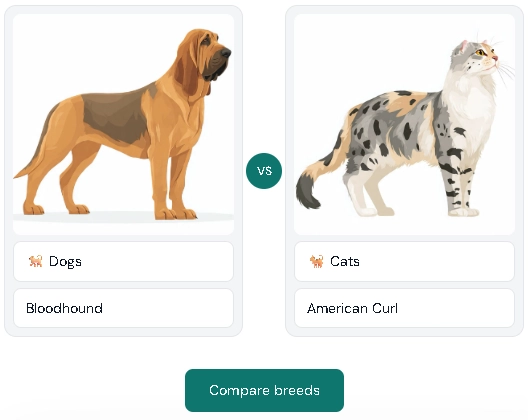
Pick a pet type (Dog, Cat, Bird, Fish, Small Mammal), then choose a specific breed — for both pets. Mix species freely!
Instantly see a radar chart (5 traits), 7 detailed bar scores, lifespan, origin, and species-specific insights — all side by side.
Compare results side by side and see exactly how your two pets stack up — trait by trait.
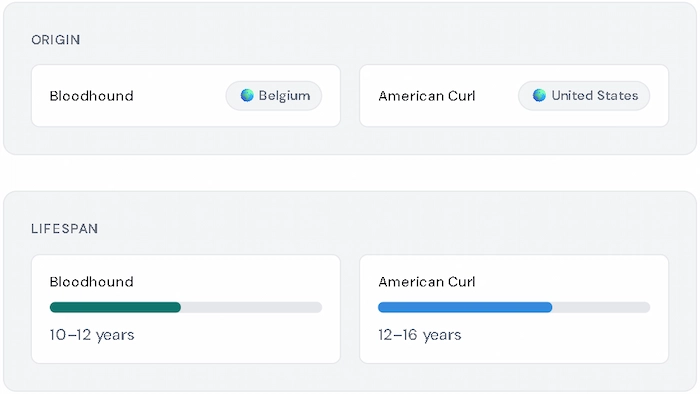
The first things you see after comparing — where each breed comes from and how long it typically lives.
See where each breed was developed — useful for climate and care context.
See the typical min–max life expectancy — a critical long-term commitment factor.
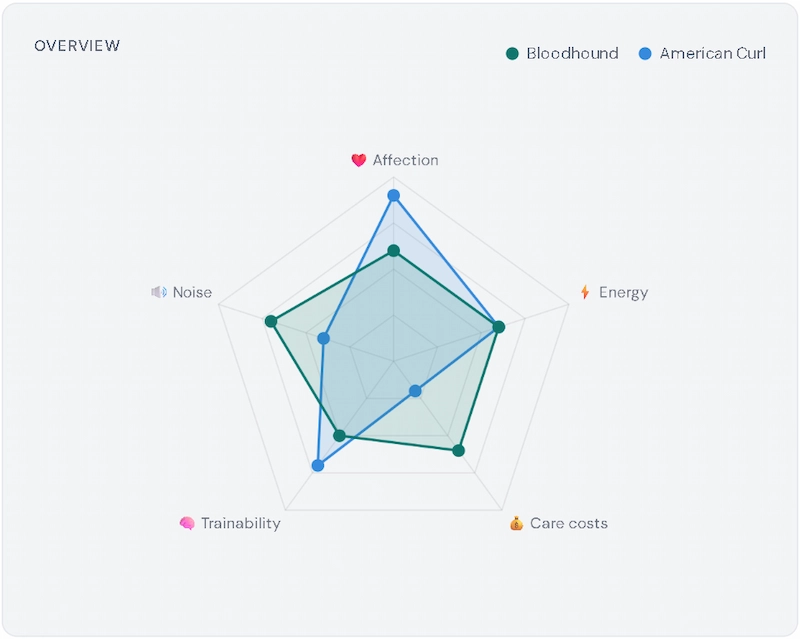
The radar chart gives you an at-a-glance comparison of both pets across 5 key traits — so you instantly see where each pet excels or falls short.
Affection, Energy, Care Costs, Trainability, Noise — all in one chart.
Each pet has its own color — instantly see who scores higher on each trait.
A bigger shape = stronger overall traits. Compare profiles in one glance.
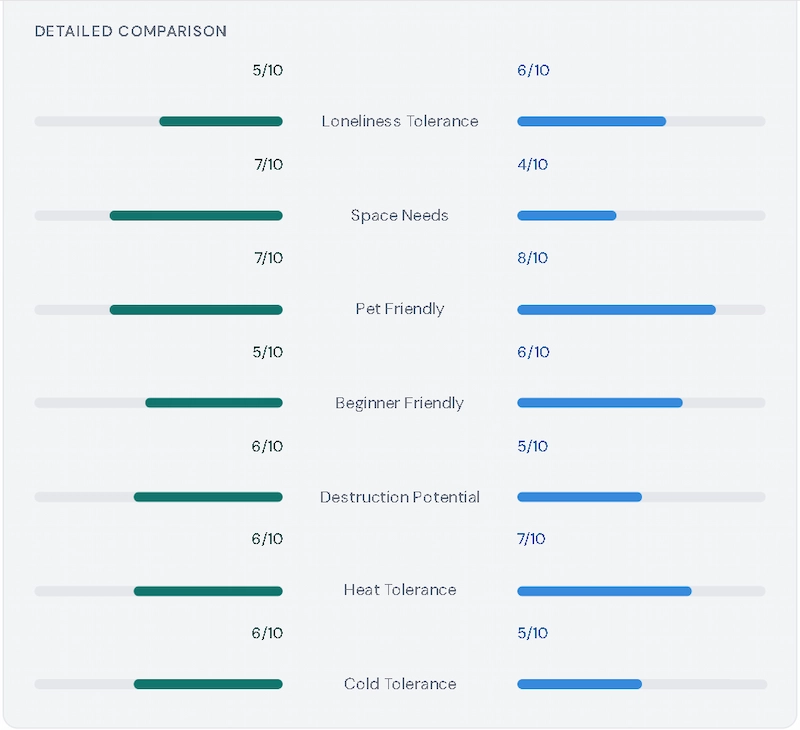
Go deeper with precise scores out of 10 for every trait — a complete side-by-side breakdown of both pets.
Loneliness Tolerance, Space Needs, Pet Friendly, Beginner Friendly, Destruction Potential, Heat & Cold Tolerance.
Both pets shown simultaneously — for instant visual contrast on every trait.
200+ breeds. 12 traits. Cross-species data. Built for real decisions — not just curiosity.
Compare dogs vs cats, birds vs fish — any combination. No other tool lets you compare freely across all pet types.
Affection, Energy, Trainability, Noise, Care Cost, Heat & Cold Tolerance, and more — a complete compatibility picture.
Get a quick visual overview with the radar chart, then dive into precise scores out of 10 for each trait.
Every score is based on standardized breed data — not user reviews or random ratings.
See exactly how long each pet lives on average — a critical factor most comparison tools ignore.
No account, no paywall. Select two pets and get your full comparison in under 5 seconds.
Understanding your results takes seconds — here's what each section means.
The radar chart displays 5 traits on a scale from 0 to 100%. A larger shape = stronger overall traits — perfect for a quick visual profile comparison.
Detailed scores rated out of 10 for each trait — a more precise comparison to see specific strengths and differences between both pets.
Lifespan shows the typical life expectancy range. Origin shows the country or region where the breed was developed.
Source: Cornell Veterinary Medicine ↗Cross-type warnings highlight which traits aren't comparable. Species-specific sections (💧 Water Type, 🕐 Activity Cycle, 🦜 Talking Ability) appear only when relevant.
Every score is based on standardized breed data. Here's exactly what we measure and how.
Measures how attached and emotionally expressive a pet is toward its owner.
Indicates how active a pet is and how much daily activity or stimulation it requires.
Indicates how easily a pet can learn behaviors, routines, or respond to guidance.
Indicates how often a pet makes sounds or vocalizes in its daily behavior.
Estimates the overall cost of maintaining a pet — food, habitat, healthcare, and upkeep.
Indicates how well a pet can stay alone without experiencing stress or discomfort.
Indicates how much space a pet requires to live comfortably.
Indicates how well a pet coexists with other animals in the same environment.
Indicates how easy a pet is to care for, especially for first-time owners.
Indicates the likelihood of a pet causing damage to its environment through natural behavior.
Indicates how well a pet tolerates warm or hot temperatures.
Indicates how well a pet tolerates cold temperatures.
Select two pets to instantly compare their traits, behavior, and lifestyle compatibility.
More smart tools to help you make better pet decisions.
Answer a few questions and get your perfect pet match based on your lifestyle, space, and routine.
Convert your pet’s age into human years and discover their life stage, health insights, and care needs.
Find personalized products for any pet based on their type, needs, and care requirements.