
Which Light Is Best for Dogs’ Eyes? A Complete Guide for Pet Owners
We choose lighting for our homes based on what looks good to us — but your dog sees the world through very different eyes. The bulbs in your living room, the glow of your TV at night, and even the night light in the hallway all affect your dog’s comfort, sleep, and long-term eye health in ways most owners never think about.
So which light is best for dogs eyes? The short answer: warm, low-intensity light (around 2700K) is gentlest on your dog’s eyes, while harsh blue-rich light — especially at night — can strain their vision and disrupt their sleep. But there’s a lot more worth understanding, because the “right” light depends on the time of day, your dog’s age, and what you’re trying to achieve.
This guide breaks down exactly how dogs perceive light, which types are best (and worst) for their eyes, and how to set up lighting that keeps your pup healthy and relaxed.
Table of Contents
🐾 Quick tip before we dive in
A dog’s sensitivity to light changes as they age — senior dogs often develop cloudier lenses and more fragile vision, which makes harsh lighting harder on their eyes. Curious how old your dog really is in human years? Try our free Pet Age Calculator → It takes 10 seconds and helps you understand what eye and lighting needs your dog may have at their life stage.
How Dogs See Light Differently From Humans
Before we talk about bulbs, it helps to understand the canine eye, because it’s built for a completely different job than ours.
The retina contains two kinds of light-sensing cells: rods, which detect motion and work in low light, and cones, which handle color and detail in bright light. Humans are cone-heavy. Dogs are the opposite — their retinas are rod-dominated, which is why they see so well in dim conditions but perceive a blurrier, less colorful world overall.
A few key differences shape how light affects them:
- Better low-light vision. Dogs have a special reflective layer behind the retina called the tapetum lucidum, which bounces light back onto the light-sensing cells, giving them a second chance to capture it. This is why dogs can see in roughly six times less light than humans — and why their eyes glow in photos.
- They’re crepuscular. Dogs are naturally most active at dawn and dusk, so their eyes are optimized for twilight rather than bright noon sun or pitch darkness.
- Dichromatic color vision. Dogs have only two types of cones (we have three), so they see the world mainly in blues and yellows. Reds and greens appear as muddy grays and browns. Their color vision is similar to a person with red-green color blindness.
- Lower visual acuity. Canine daytime vision is estimated around 20/75 and their night vision blurrier still, so they rely heavily on contrast, brightness, and movement rather than sharp detail.
The takeaway: because dogs are so sensitive to dim light and motion, bright or flickering artificial light can be more disruptive to them than it is to us.
So, Which Type of Light Is Best for Dogs’ Eyes?
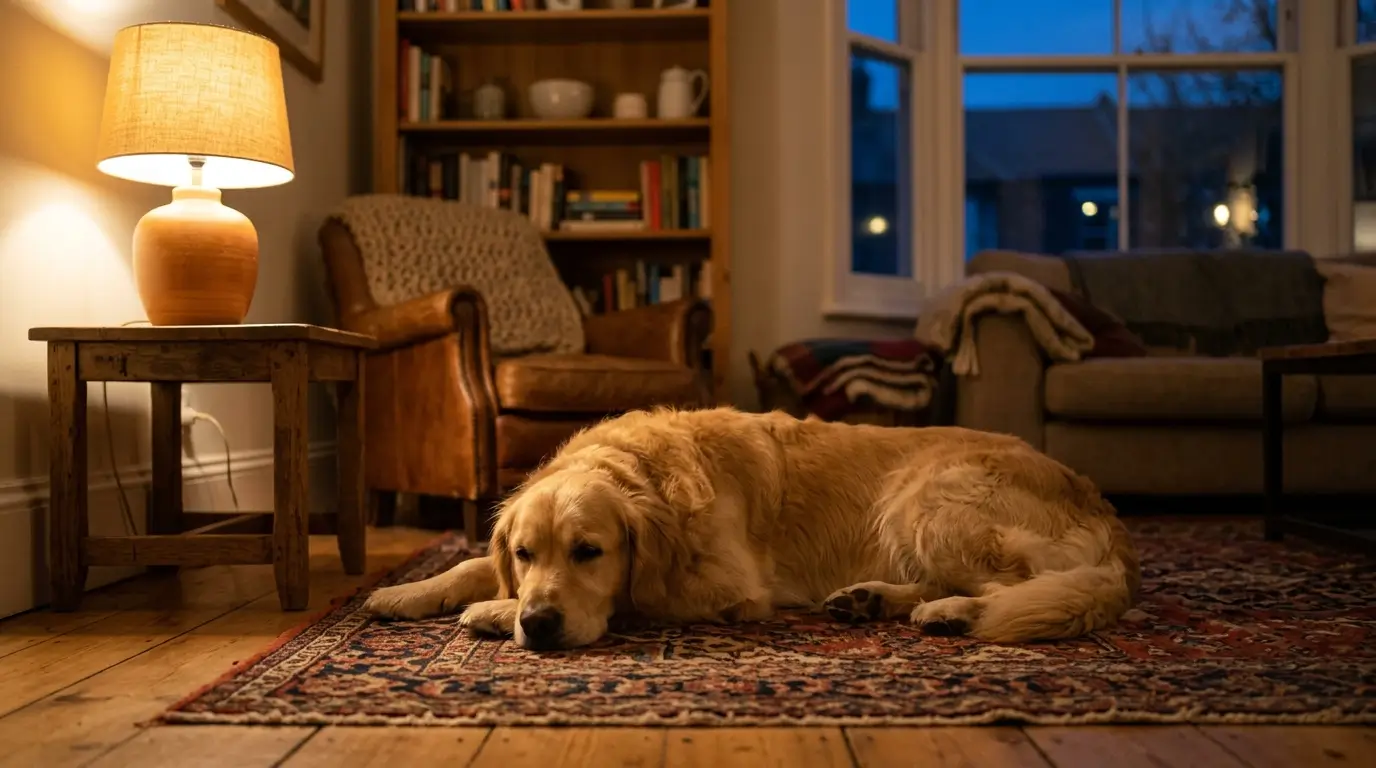
For everyday comfort and eye health, soft, warm-toned light in the 2700K–3000K range is the safest, most dog-friendly choice. It illuminates a space well without flooding your dog’s sensitive eyes with the bright, blue-heavy wavelengths that signal “daytime” to their brain.
Here’s why warm light wins:
- It’s easier on rod-dominated eyes, which are already highly light-sensitive.
- It doesn’t suppress melatonin the way blue-rich light does, so it won’t interfere with your dog’s natural sleep signals.
- It creates a calm, cozy environment rather than an alert, stimulating one.
Bright “daylight” bulbs (5000K and above) aren’t dangerous during the day, but they’re a poor choice for evenings or for any room where your dog rests.
Light Bulb Types: LED, Incandescent, and Fluorescent
The type of bulb matters just as much as its color temperature.
LED lights are energy-efficient and, when high quality, don’t emit harmful UV or infrared radiation that would damage your dog’s eyes. The catch is twofold: many LEDs are blue-rich, and cheaper ones can flicker at a rate humans don’t notice but dogs — with their motion-sensitive eyes — may find genuinely irritating. Choose warm-white, dimmable, flicker-free LEDs and you get the best of both worlds.
Incandescent bulbs naturally produce warm, flicker-free light that’s gentle on canine eyes. The downside is energy cost and heat, but for a cozy resting area many owners still like them.
Fluorescent and CFL bulbs are the least dog-friendly option. They tend to be blue-heavy, and they can produce a subtle flicker and hum that may bother sensitive dogs. If you can avoid them in spaces where your dog spends a lot of time, do.
Understanding Color Temperature (Kelvin)
Color temperature is measured in Kelvin (K), and it’s the single most useful number to look at when buying bulbs for a home with dogs:
- 2700K–3000K (warm white): Best for evenings, resting areas, and night use. Cozy and calming.
- 3500K–4100K (neutral white): Fine for daytime activity areas.
- 5000K+ (daylight/cool white): Mimics midday sun. Use sparingly and avoid entirely at night, since it strongly signals “stay awake” to your dog’s brain.
If you want flexibility, smart bulbs that shift from cool light during the day to warm light in the evening let you match your dog’s natural rhythm automatically.
The Truth About Blue Light and Dogs
Blue light deserves its own section because it’s where the real risk lies — not from eye damage so much as from disrupted sleep and stress.
Short-wavelength blue light (around 480nm) is detected by special retinal cells containing a pigment called melanopsin, which feed directly into the brain’s master clock. When these cells sense blue light, they suppress melatonin, the hormone that makes your dog sleepy. This is exactly the system that tells the body “it’s daytime, stay alert.”
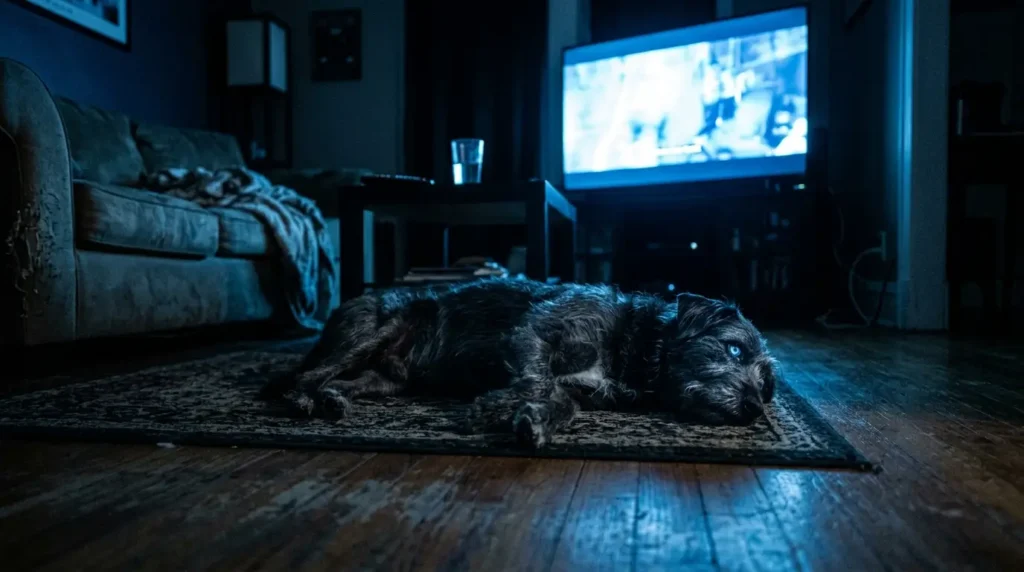
The biggest sources of blue light in your home are TVs, smartphones, tablets, computer screens, and cool-white LED or CFL bulbs. A dog dozing next to a glowing TV late at night, or in a room lit by bright daylight bulbs, may struggle to settle — sometimes showing restlessness that looks a lot like anxiety. Over the long term, chronically disrupted circadian rhythms are linked to broader health problems.
This doesn’t mean blue light is “toxic” to dogs, but minimizing evening blue-light exposure is one of the easiest things you can do for their wellbeing.
Should You Leave a Light On for Your Dog at Night?
This is one of the most common questions owners ask, and the honest answer is: most healthy adult dogs sleep best in darkness.
Dogs have a diurnal circadian rhythm, and darkness triggers the melatonin production they need for deep, restorative sleep. Their excellent low-light vision means they can navigate a dark room far better than you can, so they rarely need a light to feel safe.
That said, a dim light can genuinely help certain dogs:
- Puppies still adjusting to a new home
- Senior dogs with declining vision who appreciate a little extra guidance
- Anxious dogs who are calmer with a soft glow when home alone
If your dog falls into one of these groups, the rule is simple: use a warm-colored, low-wattage night light (around 2700K). Avoid bright or blue-toned night lights, which can do more harm than good by interfering with sleep. A dim warm glow gives comfort without convincing your dog’s brain that it’s noon.
Natural Light Matters Most of All
Amid all the talk of bulbs, don’t forget the most important light source: the sun.
Morning sunlight hitting your dog’s eyes is the strongest signal for setting a healthy circadian rhythm. It anchors their internal clock, supports hormone balance, regulates sleep, and contributes to overall health. Dogs that spend their days in dim, artificially lit spaces with little natural light can develop disrupted sleep and behavior over time.
Aim to give your dog regular daytime access to natural light — a sunny window, time in the yard, or daily walks — and let the evenings get genuinely dark. That natural rhythm of bright day and dark night does more for their eyes and wellbeing than any bulb you can buy.
Common Lighting Mistakes to Avoid
- Using daylight (5000K+) bulbs at night. The number one mistake — it suppresses melatonin and keeps dogs alert.
- Leaving the TV on for a home-alone dog. The flicker and blue light can disturb rather than soothe.
- Choosing cheap, flickering LEDs. Invisible to you, irritating to your dog’s motion-sensitive eyes.
- Keeping a bright light on all night. Even if your dog is anxious, dim and warm beats bright every time.
- Depriving dogs of daytime sunlight. Artificial light alone can’t replace the circadian benefits of natural light.
Conclusion
When it comes to which light is best for dogs’ eyes, the principle is refreshingly simple: warm, soft, and natural wins. Stick to warm-white bulbs (2700K–3000K) in the evenings, prioritize plenty of natural daylight, keep nights dark for healthy sleep, and steer clear of bright blue-rich light and flickering bulbs near your dog’s resting spots. Reserve dim, warm night lights for puppies, seniors, or anxious pups who truly benefit from them.
Get the lighting right and you’re not just protecting your dog’s eyes — you’re supporting better sleep, calmer behavior, and healthier days.
Frequently Asked Questions
What color light is best for dogs eyes? Warm white light (around 2700K) is best for dogs’ eyes. It’s gentle on their light-sensitive vision and doesn’t disrupt sleep. Red-toned light is also easy on their eyes and has the least impact on their sleep cycle.
Is LED light bad for dogs’ eyes? High-quality LED light isn’t harmful to dogs’ eyes and doesn’t emit dangerous UV radiation. The concerns are blue-rich light disrupting sleep and cheap LEDs flickering, which sensitive dogs can find irritating. Choose warm, dimmable, flicker-free LEDs.
Is blue light harmful to dogs? Blue light won’t typically damage a dog’s eyes, but it suppresses melatonin and disrupts their circadian rhythm, making it harder for them to sleep. Limit exposure to screens and cool-white bulbs in the evening.
Should I leave a light on for my dog at night? Most healthy adult dogs sleep best in complete darkness. Only puppies, senior dogs, or anxious dogs may benefit from a dim, warm-colored night light. Avoid bright or blue-toned lights at night.
Can dogs see in the dark? Dogs can’t see in total darkness, but they see far better than humans in low light thanks to their rod-rich retinas and a reflective layer called the tapetum lucidum — needing about six times less light than we do.
Sources & References
- American Veterinary Medical Association (AVMA)
- VCA Animal Hospitals
- Merck Veterinary Manual
- PetMD — Golden Retriever Health
⚠️ This article is for informational purposes only and does not constitute veterinary advice. Always consult a qualified veterinarian for health concerns.