
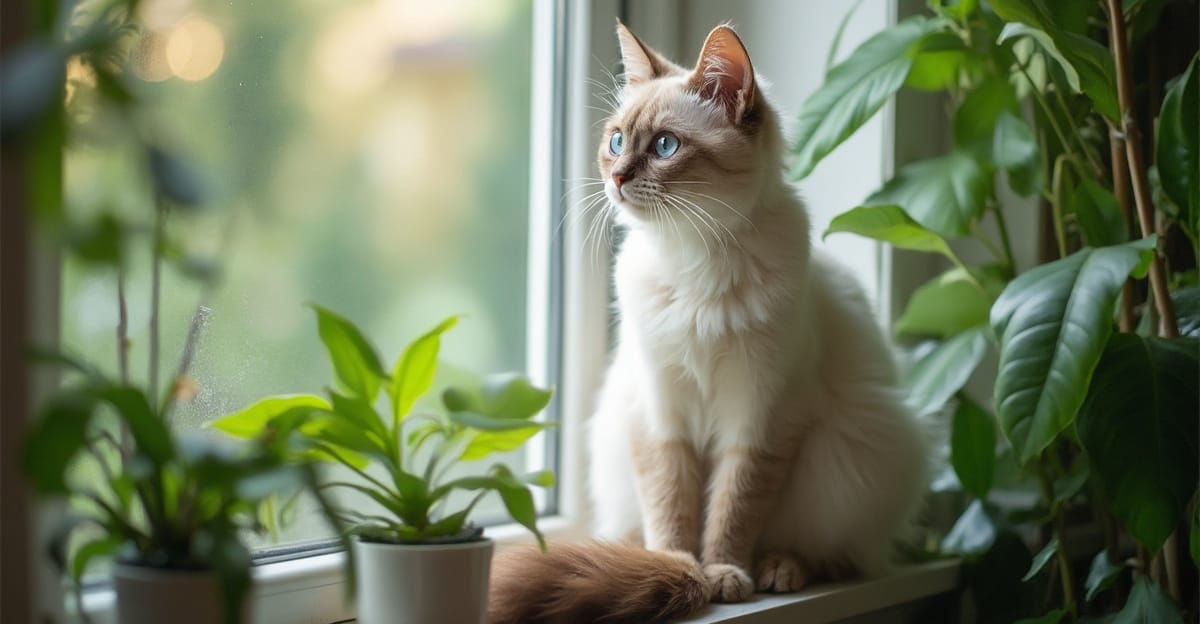
Training Your Birman: A Comprehensive Guide
With their striking blue eyes and gentle temperament, Birmans have captured the hearts of cat lovers worldwide. These medium-sized felines from Myanmar bring a unique combination of intelligence and affection that makes birman training both rewarding and achievable. Unlike some independent cat breeds, Birmans genuinely enjoy human interaction and thrive on positive attention, creating natural opportunities for successful training sessions. Their moderate energy levels and people-oriented nature mean they’re often eager participants in learning new behaviors, whether it’s basic commands or more complex tricks. Understanding your Birman’s inherent traits and learning style is the foundation for building a strong training relationship that benefits both cat and owner.
Table of Contents
Key Takeaways
- Birmans are moderately trainable and respond best to positive reinforcement techniques.
- Consistency and short, engaging sessions are crucial for successful birman training.
- Interactive play and mental stimulation are vital for a Birman’s well-being and training success.
- While generally well-adjusted, understanding Birman-specific behaviors helps address potential challenges.
Quick Facts
| Size Category | Medium |
| Origin | Myanmar |
| Hypoallergenic | no |
| Energy Level | moderate energy |
| Trainability | moderately trainable |
| Breed Behavioral Problems | rare behavioral issues, generally well-adjusted |
| Breed Training Response | responds well to positive reinforcement and consistent training |
| Breed Litter Training | usually easy to litter train, adapts quickly |
How to Start Training Your Birman
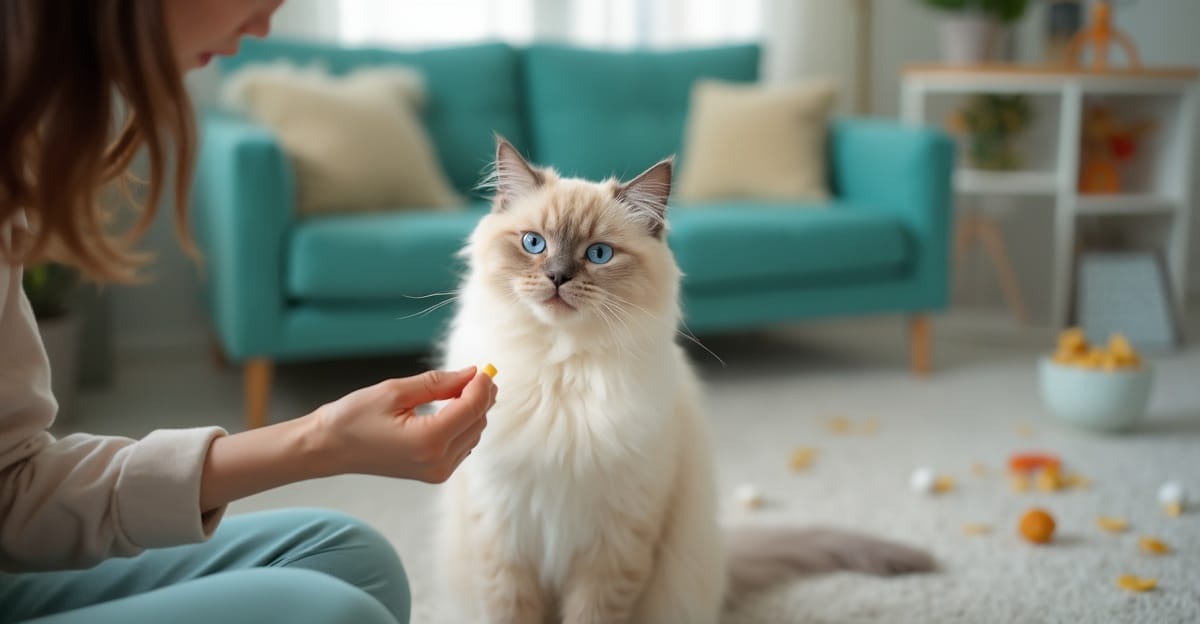
Beginning your birman training journey requires understanding the unique characteristics that make these cats such wonderful companions. Birmans possess an inherent intelligence combined with a strong desire to please their human family members, creating an ideal foundation for successful training outcomes. Their affectionate nature means they naturally seek interaction and approval, making them more receptive to training efforts than many other cat breeds.
Establishing Early Training Foundations
The key to effective Birman training lies in establishing consistent routines from the moment your cat arrives home. These cats thrive on predictability, so creating structured feeding times, play sessions, and litter box maintenance schedules helps them understand expectations. Early socialization plays a crucial role in developing well-rounded behaviors, as Birmans who are exposed to various people, sounds, and gentle pets during their formative weeks tend to be more adaptable and confident throughout their lives.
Matching Training to Birman Energy Levels
Birmans have moderate energy levels that require thoughtful consideration when planning training sessions. Unlike high-energy breeds that might need extensive physical challenges, Birmans benefit from balanced activities that combine mental stimulation with gentle physical engagement. Their attention spans are moderate but focused, meaning they can concentrate on learning tasks for reasonable periods without becoming overstimulated or losing interest.
Building Trust Through Positive Interactions
The foundation of all successful birman training rests on building a trusting relationship between cat and owner. Birmans are naturally affectionate and respond exceptionally well to gentle, patient approaches. Harsh corrections or punishment can damage their sensitive nature and actually impede training progress. Instead, focus on creating positive associations with training time through treats, praise, and interactive play that makes learning enjoyable rather than stressful.
Is Positive Reinforcement Effective for Birmans?

Positive reinforcement techniques prove remarkably effective for Birmans due to their inherent desire for human approval and their food-motivated nature. These cats respond enthusiastically to rewards-based training methods, making clicker training particularly successful. The combination of their intelligence and social orientation means they quickly learn to associate specific behaviors with positive outcomes, accelerating the training process significantly.
Implementing Clicker Training Successfully
Clicker training works exceptionally well with Birmans because it provides clear, consistent communication about desired behaviors. The sharp sound of the clicker serves as a precise marker that tells your Birman exactly which action earned the reward. Start by establishing the association between the clicker sound and treats, then gradually introduce simple commands while maintaining short, focused sessions that respect their moderate attention span.
Choosing Effective Rewards and Motivation
Understanding what motivates your individual Birman is crucial for successful positive reinforcement training. While many Birmans are food-motivated, others might prefer interactive play with feather wands or laser pointers as rewards. Some cats respond best to verbal praise and gentle petting, especially given the Birman’s affectionate nature. Experiment with different reward types to discover what creates the strongest positive response from your cat, then use these high-value rewards consistently during training sessions.
Timing and Consistency in Reinforcement
The effectiveness of positive reinforcement techniques depends heavily on proper timing and consistency. Birmans learn best when rewards are delivered immediately after the desired behavior occurs, creating clear cause-and-effect relationships in their minds. Maintaining consistency across all family members ensures your Birman receives the same messages about expected behaviors, preventing confusion and accelerating learning progress.
Common Training Challenges for Birmans
While Birmans are generally well-adjusted cats with rare behavioral issues, certain challenges can arise during training that require specific approaches and understanding. Their social nature and need for regular company can sometimes manifest as attention-seeking behaviors that might be misinterpreted as behavioral problems. Recognizing these breed-specific tendencies helps owners address challenges proactively rather than reactively.
Managing Vocalization and Attention-Seeking
Birmans can become quite vocal when they feel their needs aren’t being met, particularly regarding social interaction and mental stimulation. This vocalization isn’t necessarily problematic behavior but rather communication that requires appropriate responses. Training Birmans with kids often involves teaching both the cat and children about appropriate interaction levels and timing. Providing adequate interactive play and establishing regular attention schedules can significantly reduce excessive vocalization while strengthening the human-cat bond.
Preventing and Addressing Destructive Behaviors
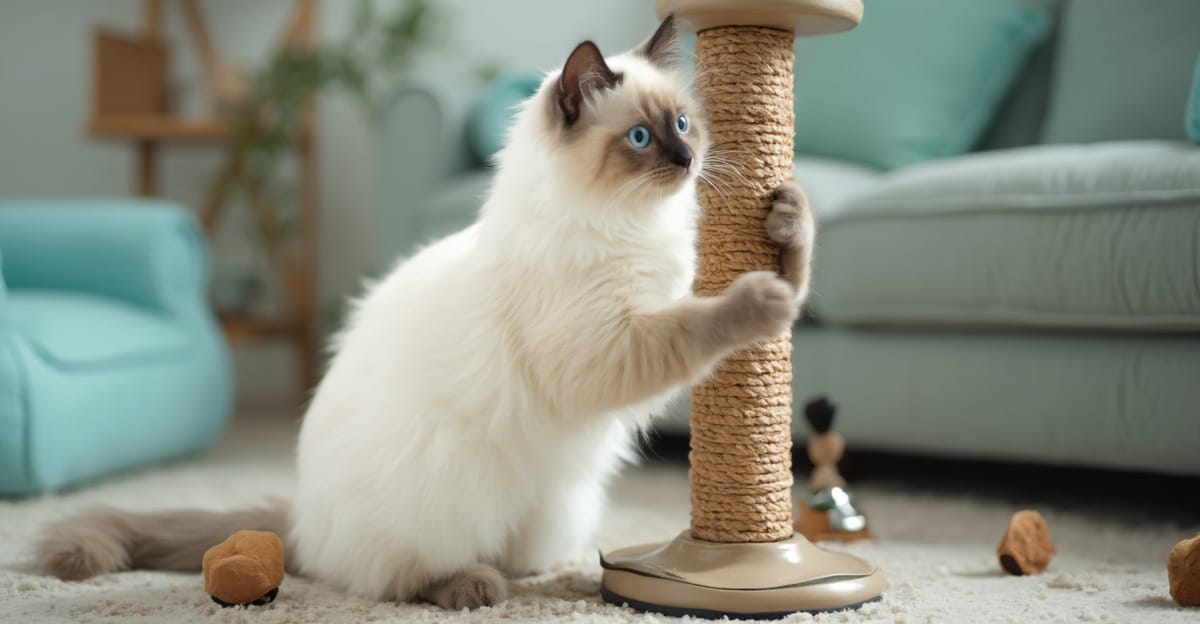
Although Birmans have low destruction potential, inadequate mental enrichment or inconsistent training can lead to undesirable habits like inappropriate scratching or litter box avoidance. Their moderate energy levels mean they need sufficient outlets for natural behaviors, including climbing, scratching, and hunting-style play. Providing appropriate scratching surfaces, puzzle feeders, and rotating toy selections helps prevent boredom-related behavioral issues.
Addressing Separation Anxiety
The Birman’s need for regular company can sometimes develop into separation anxiety if not properly managed. These cats form strong bonds with their human families and may exhibit stress-related behaviors when left alone for extended periods. Gradual desensitization to alone time, combined with engaging puzzle toys and comfortable resting areas, helps Birmans develop confidence and independence while maintaining their naturally affectionate personalities.
What Tricks Can Birmans Learn?
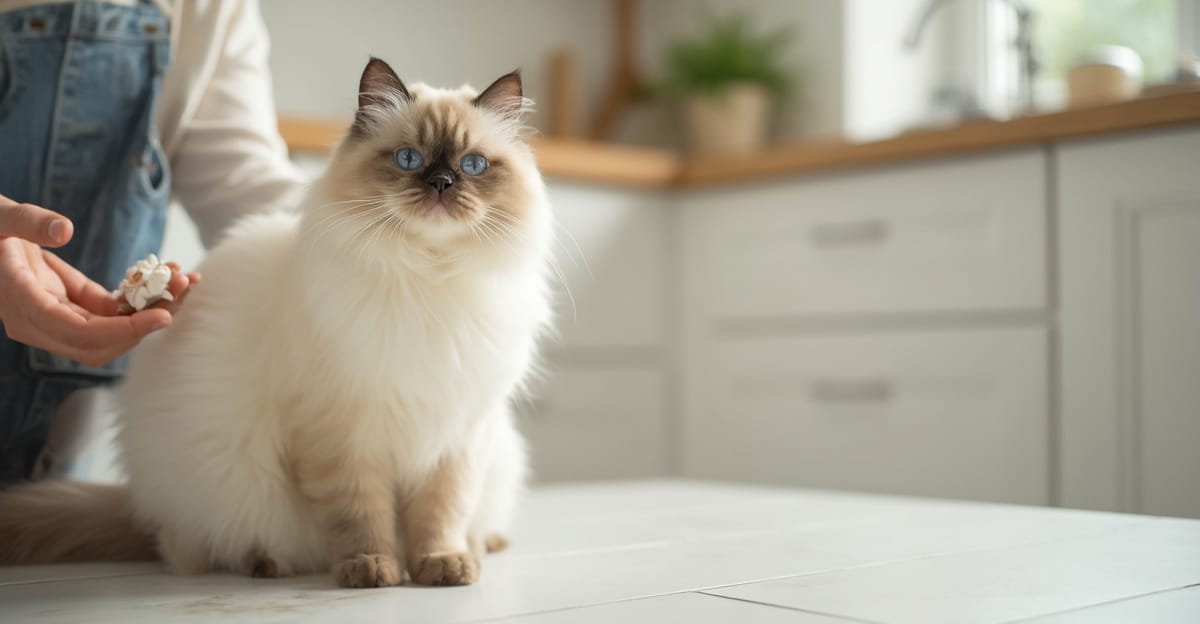
Birmans possess the intelligence and motivation necessary to learn an impressive variety of tricks and commands. Their moderate energy levels and people-oriented nature make them excellent candidates for trick training, as they enjoy the mental stimulation and positive attention that comes with learning new behaviors. The key lies in matching trick complexity to their attention span while maintaining the fun, interactive nature that Birmans find most engaging.
Basic Commands and Foundation Behaviors
Starting with fundamental commands like ‘sit,’ ‘stay,’ and ‘come’ provides the foundation for more complex trick training. Birmans typically master these basics relatively quickly due to their responsive nature and desire to please. The ‘sit’ command often comes naturally to food-motivated Birmans when treats are held above their heads, while ‘stay’ requires more patience and gradual distance building. Teaching recall with ‘come’ leverages their social nature and strengthens the bond between cat and owner.
Interactive Play and Fetch Training
Many Birmans can learn to play fetch, particularly with small, lightweight toys that appeal to their hunting instincts. Their playful nature makes this trick especially enjoyable for both cat and owner. Start with short distances and high-value rewards, gradually increasing the challenge as your Birman becomes more confident. Some cats prefer specific types of toys for fetching, so experiment with different textures and sizes to find what motivates your individual cat most effectively.
Advanced Training and Enrichment Activities
With consistent positive reinforcement, Birmans can master more complex behaviors like leash walking, puzzle-solving, and even agility-style activities adapted for cats. Their intelligence allows them to understand multi-step processes, while their moderate energy levels make them suitable for sustained training sessions. Mental enrichment through trick training provides essential stimulation that prevents boredom and reinforces the positive relationship between cat and owner.
How to Leash Train Your Birman
Step 1: Introduce the harness gradually
Let your Birman sniff and investigate the harness, then place it near their food bowl for a few days so they associate it with positive experiences.
Step 2: Put the harness on for short periods
Start with just a few minutes, distracting them with treats or play. Gradually increase the time they wear it, always supervising.
Step 3: Attach the leash indoors
Once comfortable with the harness, attach a lightweight leash and let them drag it around the house under supervision. Never leave them unsupervised with the leash.
Step 4: Practice walking indoors
Gently guide your Birman with the leash, using treats and praise to encourage forward movement. Keep initial sessions very short and positive.
Step 5: Transition to outdoors
Choose a quiet, safe outdoor area for the first few walks. Keep sessions brief, focusing on positive exploration rather than long distances, and always be prepared to pick them up if they get scared.
Conclusion
Successfully training your Birman requires patience, consistency, and understanding of their unique personality traits. These moderately trainable cats respond exceptionally well to positive reinforcement techniques, particularly clicker training that leverages their intelligence and food motivation. Their affectionate nature and desire for human interaction create natural opportunities for successful birman training sessions when approached with gentle, consistent methods. Remember that addressing potential challenges like excessive vocalization or furniture scratching through proper enrichment and management prevents problems before they develop. Birmans can master an impressive variety of tricks and behaviors, from basic commands to complex activities like leash walking, providing mental stimulation that strengthens the bond between cat and owner. The key to success lies in keeping training sessions short, positive, and tailored to their moderate energy levels and attention span. With proper techniques and realistic expectations, birman training becomes an enjoyable journey that enhances both your cat’s well-being and your relationship together. See how the Birman’s trainability stacks up against similar breeds using our Pet Comparison Tool — compare behavior, intelligence, and care needs side by side.
Sources & References
⚠️ This article is for informational purposes only and does not replace professional veterinary advice. Always consult a qualified vet for your pet’s health needs.