
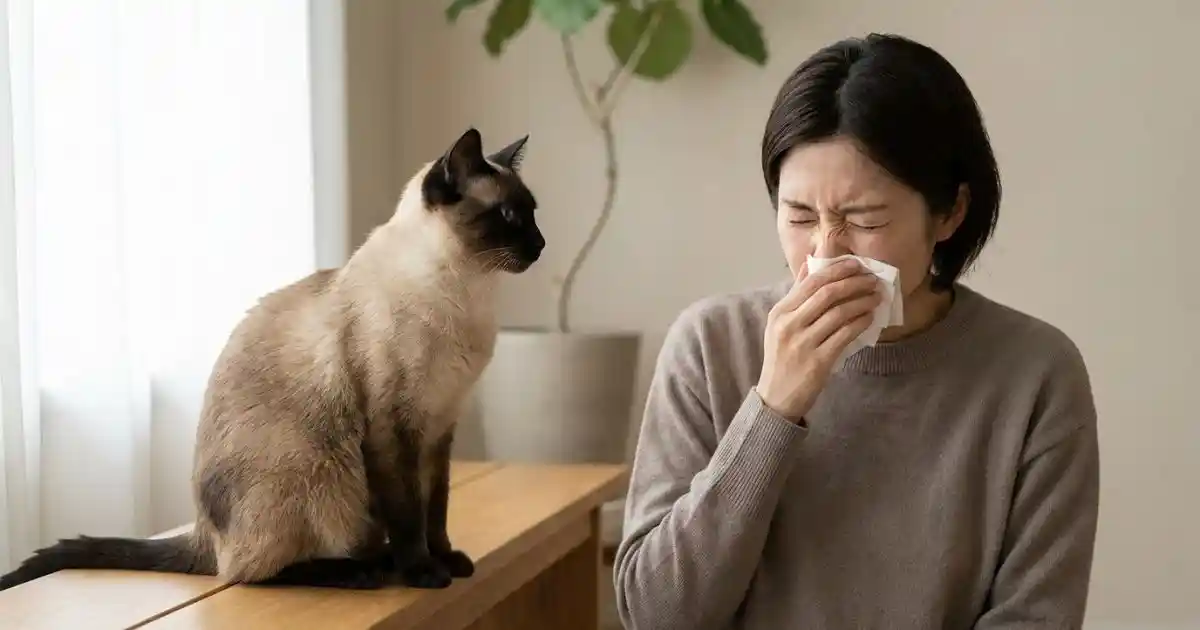
Are Siamese Cats Hypoallergenic? The Honest Answer
Table of Contents
You’ve wanted a cat for years. You finally settle on a Siamese — beautiful, vocal, intelligent. Then someone tells you they’re hypoallergenic and you think: perfect, problem solved.
Not so fast.
The truth about Siamese cats and allergies is more nuanced than most pet sites will tell you — and getting it wrong means bringing home a cat that makes you miserable. This article gives you the honest, science-based answer so you can make the right decision.
Are Siamese Cats Hypoallergenic? (Quick Answer)
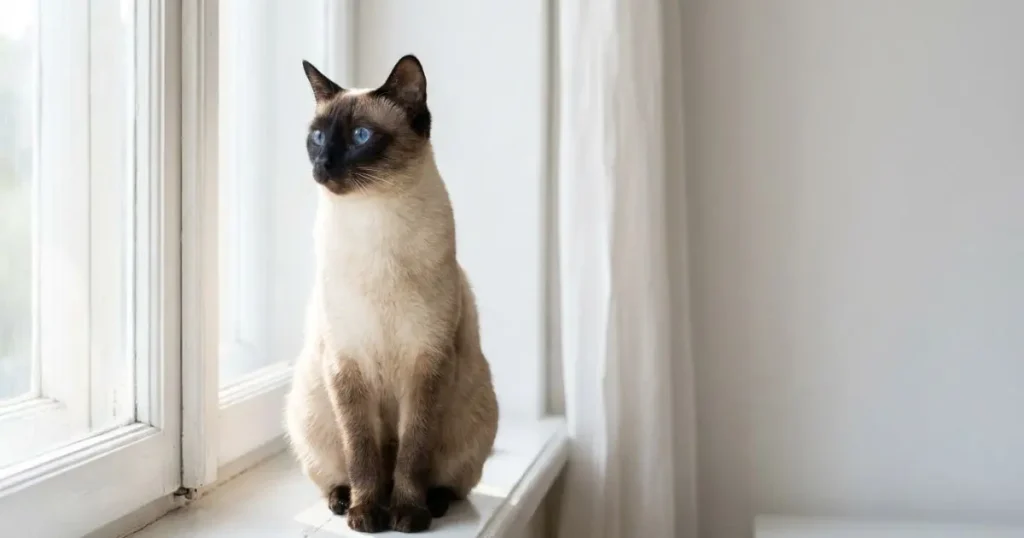
No — Siamese cats are not hypoallergenic. But they are considered a lower-allergen breed.
Siamese cats produce less of the primary allergy-causing protein than many other breeds, which makes them more tolerable for some allergy sufferers. However, “lower allergen” is not the same as “allergy-free.” If you have moderate to severe cat allergies, a Siamese cat will still trigger reactions.
The bottom line: Siamese cats are one of the better options for people with mild cat allergies — but no cat breed is completely safe for allergy sufferers.
What Makes a Cat Hypoallergenic?
Before evaluating any specific breed, it helps to understand what cat allergies actually are — because most people have the wrong idea.
Most people assume they’re allergic to cat fur. They’re not.
Cat allergies are triggered by a protein called Fel d1 — short for Felis domesticus 1, the first allergen protein identified in domestic cats — produced in a cat’s saliva, sebaceous skin glands, and urine. When cats groom themselves, Fel d1 coats their fur — and when that fur sheds, the protein becomes airborne and lands on surfaces throughout your home.
According to the ACAAI, no cat breed is 100% hypoallergenic — every cat produces Fel d1. The difference between breeds is how much they produce, and how much they shed.
What actually determines allergen levels:
- Amount of Fel d1 produced by the individual cat
- How much the cat sheds — more shedding means more allergen spread
- Size of the cat — larger cats generally produce more allergen
- Sex of the cat — unneutered males produce the most Fel d1
- Individual variation — two cats of the same breed can produce very different allergen levels
This is why “hypoallergenic” is a spectrum, not a yes or no.
Siamese Cats and Allergies — What the Science Says
Siamese cats are consistently listed among the lower-allergen breeds for two specific reasons.
Reason 1 — Lower Fel d1 production Siamese cats produce less Fel d1 than breeds like Maine Coons or Persians. This is partly genetic and partly related to their lean body type and thinner coat.
Reason 2 — Short, fine coat Siamese cats have a single-layer, short coat that sheds less than double-coated breeds. Less shedding means less allergen distributed throughout your living space.
What this means in practice: many people with mild cat allergies report fewer symptoms around Siamese cats compared to other breeds. But “fewer symptoms” still means symptoms — sneezing, itchy eyes, and skin reactions are still possible.
Important variable — neutering Neutered male Siamese cats produce significantly less Fel d1 than intact males. If you’re allergy-sensitive, always choose a spayed or neutered cat.
Are All Siamese Cats the Same for Allergies?
No — and this matters if you’re researching specific types.
| Siamese Type | Coat Type | Shedding Level | Allergy Risk |
|---|---|---|---|
| Traditional (Applehead) Siamese | Short, single layer | Low-Moderate | Medium |
| Modern Siamese | Short, very fine | Low | Medium-Low |
| Blue Point Siamese | Short, single layer | Low-Moderate | Medium |
| Flame Point Siamese | Short, single layer | Low-Moderate | Medium |
| Balinese (long-hair Siamese) | Long, silky | Moderate | Medium-Low* |
*The Balinese — sometimes called the “long-haired Siamese” — actually produces less Fel d1 than standard Siamese despite its longer coat, making it one of the most allergy-friendly options in the Siamese family.
All Siamese types carry similar allergen risk levels. The individual cat’s Fel d1 production matters more than the specific point color or body type.
Tips to Reduce Allergic Reactions to Siamese Cats
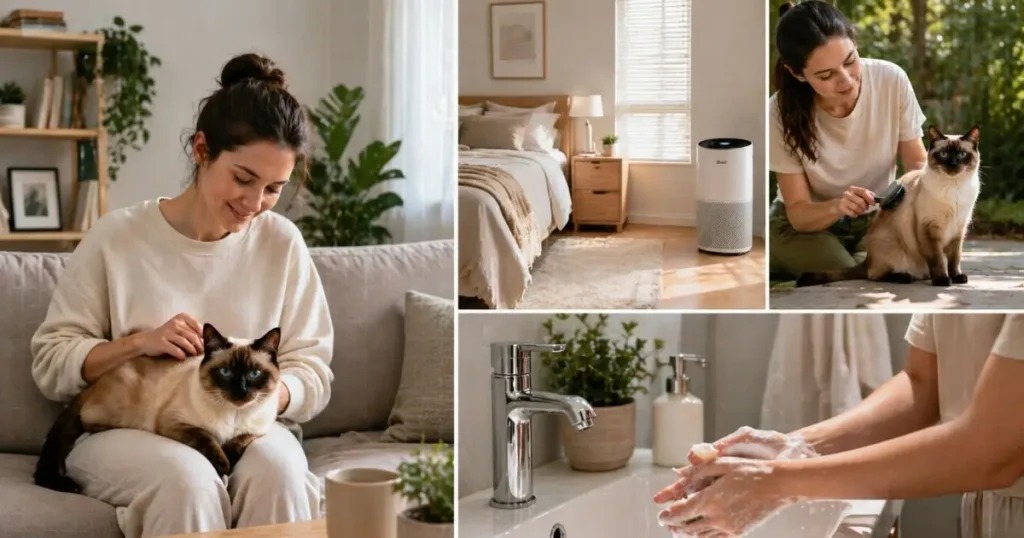
If you have mild allergies and still want a Siamese, these strategies can make a significant difference in your day-to-day comfort.
1 — Choose a spayed or neutered cat Intact males produce the most Fel d1. A neutered male or female Siamese will expose you to considerably less allergen.
2 — Brush your cat outside regularly Weekly brushing removes loose fur and dander before it spreads through your home. Always do this outdoors or in a well-ventilated area, and consider wearing a mask during brushing.
3 — Create allergen-free zones Keep your bedroom strictly off-limits to your cat. Spending 8 hours per night in a low-allergen space dramatically reduces your overall exposure.
4 — Use a HEPA air purifier HEPA filters capture airborne Fel d1 particles. Place one in the rooms where your cat spends the most time.
5 — Wash hands after contact Avoid touching your face after petting your cat. Wash hands immediately after any extended contact.
6 — Clean frequently Vacuum with a HEPA-filter vacuum at least twice a week. Wash soft furnishings regularly — Fel d1 accumulates on fabric surfaces.
7 — Consider allergy immunotherapy If you’re serious about living with a Siamese long-term, consult an allergist about immunotherapy (allergy shots). This gradually desensitizes your immune system and can significantly reduce reactions over time.
What Cats Are Truly Hypoallergenic?
If your allergies are moderate to severe, a Siamese cat may not be the right choice. Here are the breeds most consistently recommended for allergy sufferers — all produce lower levels of Fel d1 than average.
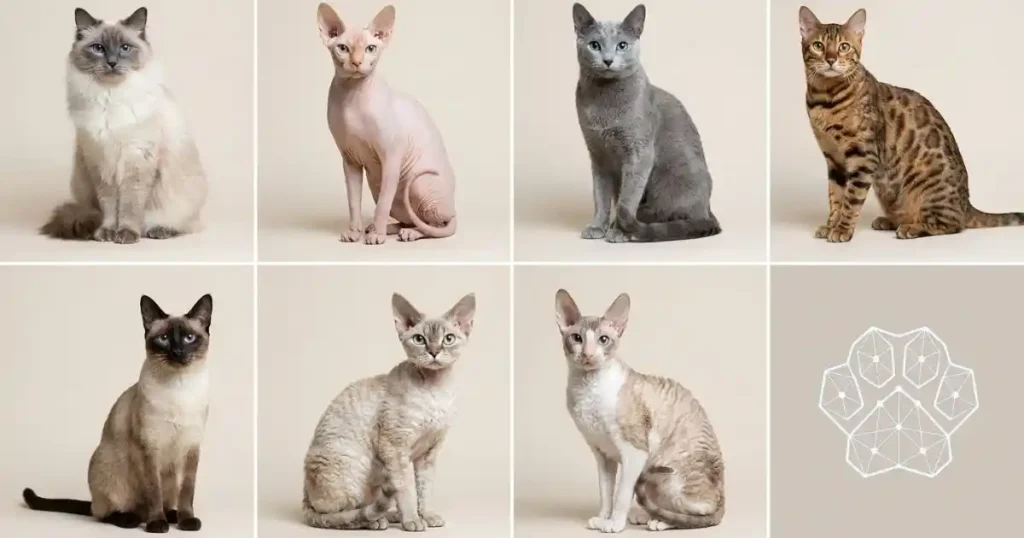
| Cat Breed | Hypoallergenic Level | Fel d1 Production | Shedding |
|---|---|---|---|
| Balinese | High | Very Low | Moderate |
| Sphynx | High | Low | None (hairless) |
| Russian Blue | Moderate-High | Lower than average | Low |
| Bengal | Moderate | Lower than average | Low |
| Siamese | Moderate | Lower than average | Low |
| Devon Rex | Moderate | Moderate | Very Low |
| Cornish Rex | Moderate | Moderate | Very Low |
The Balinese and Sphynx are the strongest options for allergy sufferers. The Sphynx’s lack of fur means less allergen distribution — though it still produces Fel d1 in its skin and saliva.
No breed on this list is completely allergen-free. But all of them are significantly more manageable than high-shedding, high-Fel d1 breeds like Persians or Maine Coons.
Is a Siamese Cat Right for You?
Allergies are only one part of the equation. Siamese cats have a strong personality — they’re vocal, social, demanding of attention, and don’t do well when left alone for long periods.
If you’re wondering whether a Siamese fits your lifestyle beyond just the allergy question, take our free Pet Matchmaker Quiz to find out which cat breed — or which type of pet entirely — suits your home, schedule, and experience level.
Frequently Asked Questions
Are Siamese cats hypoallergenic?
No cat is truly hypoallergenic, including Siamese cats. However, Siamese cats produce less Fel d1 — the primary allergen protein — than many other breeds, and their short, low-shedding coat spreads less allergen through the home. They are considered a lower-allergen option, not an allergen-free one.
Are blue point Siamese cats hypoallergenic?
Blue Point Siamese cats carry the same allergen profile as other Siamese varieties. The point color does not affect Fel d1 production. All Siamese types — blue point, seal point, flame point — have similar allergen levels.
Are flame point Siamese cats hypoallergenic?
Flame Point Siamese cats are not hypoallergenic, but like all Siamese varieties, they tend to produce lower levels of Fel d1 than many other breeds. Individual variation between cats matters more than point color when it comes to allergen levels.
What is the most hypoallergenic cat?
No cat is 100% hypoallergenic. The Balinese and Sphynx are consistently ranked as the most allergy-friendly breeds due to very low Fel d1 production. The Russian Blue and Bengal are also strong options for mild to moderate allergy sufferers.
Final Thoughts on Siamese Cats and Allergies
Siamese cats are not hypoallergenic — but they are one of the more allergy-friendly options available. Their lower Fel d1 production and minimal shedding make them more manageable than many breeds for people with mild allergies.
If your allergies are mild, a neutered Siamese combined with good household management — HEPA filters, regular brushing, allergen-free bedroom — can absolutely work. If your allergies are moderate to severe, consider a Balinese or Sphynx instead, and always spend time with the specific cat before committing.
The worst outcome is falling in love with a breed, bringing one home, and discovering your body won’t tolerate it. Do the research now so that doesn’t happen to you.
This article is for informational purposes only and is not a substitute for medical advice. If you have cat allergies and are considering getting a cat, consult your allergist before making a decision. Individual reactions to cats vary significantly regardless of breed.