
Why Is My Betta Fish Flaring? 5 Real Reasons & What to Do
Table of Contents
You go to check on your betta fish and notice something striking — his gills are spread wide, his fins fanned out dramatically, and his whole body seems to have doubled in size. It can look alarming the first time you see it, but betta fish flaring is one of the most natural behaviors in the species.
Betta fish flaring is how bettas communicate. It’s a visual display rooted in instinct, and whether it signals confidence, stress, or aggression depends entirely on context. Understanding what triggers it — and how often is too much — will help you keep your fish healthier and your tank environment dialed in.
What Is Betta Fish Flaring?
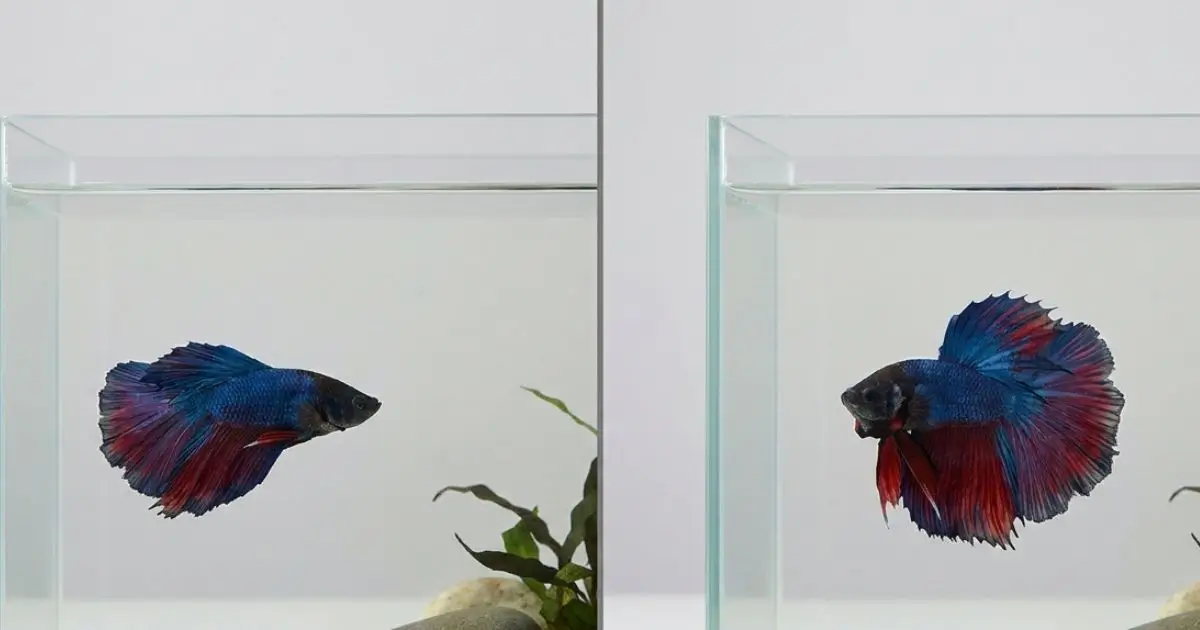
Betta fish flaring refers to the act of expanding the gill covers (called opercula) outward while simultaneously spreading the fins to their fullest extent. The result is a dramatic silhouette that makes the fish appear much larger than it actually is.
This display is a threat posture. In the wild, bettas use it to intimidate rivals and defend territory without having to resort to actual combat. It’s the fish equivalent of puffing up your chest.
During a flare, you’ll typically notice:
- The gill covers pushed wide open, revealing the bright red gill tissue beneath
- Dorsal, ventral, and tail fins fanned to full extension
- The body arched slightly or held rigid
- Intensified coloration, especially in males
Female bettas can flare too, though it’s far less common and usually less dramatic. The behavior is most pronounced in males, who are both more territorial and more vividly colored.
Why Do Betta Fish Flare Their Gills?
Betta fish flaring always has a trigger — your betta isn’t doing it randomly. Here are the most common causes.
1. Seeing Their Reflection
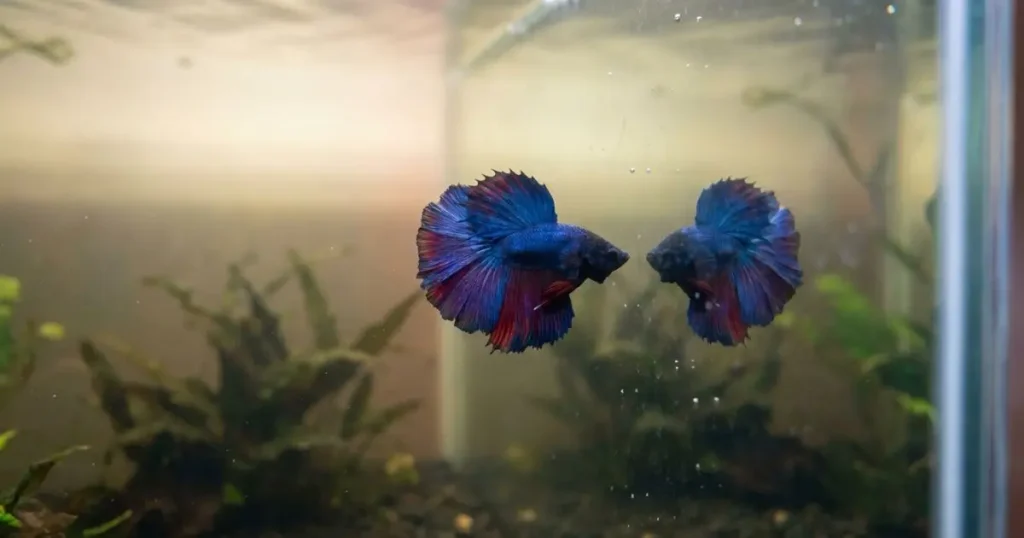
Glass tanks create reflections, especially in lower-light conditions. Your betta sees what looks like another fish moving in his territory and reacts accordingly.
This is one of the most frequent reasons bettas flare, and it often catches owners off guard. The fish isn’t in distress — he genuinely thinks there’s a rival nearby. Adjusting the lighting around the tank or adding a background to the outside of the glass usually solves this quickly.
2. Another Fish Nearby
If you have other fish in the same tank or in adjacent tanks, your betta will react to their presence. Even if there’s a physical barrier between them, bettas can see remarkably well and will flare at perceived competitors through the glass.
This is especially common with other betta fish, but some bettas will flare at other species too — particularly those with flowing fins or bright colors that resemble a rival male.
3. Territory Defense
Bettas are hardwired to defend their space. Even in a home aquarium, your fish has claimed that water as his own. When something enters or approaches that territory — whether it’s a tankmate, a net, or even your hand — flaring is the first line of defense.
New decorations or rearrangements to the tank can also trigger this response temporarily while your betta reassesses his environment.
4. Mating or Breeding Behavior
Male bettas sometimes flare toward females as part of courtship display. Unlike aggressive flaring, this is typically accompanied by intensified color and a dancing-like swimming pattern. It’s brief and stops once the interaction ends.
5. Stress or Discomfort
Not all flaring is assertive. Sometimes it signals that something is wrong.
Poor water quality, incorrect temperature, an overly bright light, or a tank that’s too small can all cause chronic stress. A betta that’s constantly uncomfortable may flare more often and for longer periods than one in a well-maintained setup.
Watch for other signs alongside the flaring: clamped fins, loss of appetite, faded color, or hiding more than usual. When those appear together, the flaring is likely a stress response rather than a normal display.
Is Flaring Good or Bad for Betta Fish?
The honest answer: it depends on frequency and context.
When flaring is normal and even beneficial:
- Brief flaring sessions (under 1–2 minutes) are considered healthy exercise. They work the fins and muscles, keep the fish mentally stimulated, and are a natural expression of instinct.
- Some betta owners intentionally use a mirror for short, controlled flaring sessions for this reason.
- Occasional flaring in response to tank activity is completely normal.
When flaring becomes a problem:
- Extended or constant flaring is physically taxing. It raises the fish’s stress hormones, exhausts the muscles involved, and can suppress immune function over time.
- A betta that flares for 15–30 minutes without stopping — especially if this happens repeatedly — is being overstimulated or genuinely stressed.
- Fins that appear ragged or torn after flaring sessions may indicate the fish is injuring himself during the display.
Think of it like exercise: a short burst is good, but running a sprint for an hour straight causes harm. The same logic applies here.
How Often Is Too Much Flaring?
There’s no universal threshold, but most experienced betta keepers use these general guidelines:
- A few times per day for 1–2 minutes each: Normal and healthy
- Persistent flaring lasting more than 5–10 minutes: Worth investigating the cause
- Near-constant flaring throughout the day: A problem that needs to be addressed
Signs that your betta is flaring excessively:
- Visibly tired or lethargic between flaring episodes
- Fins clamped or frayed at the edges
- Reduced appetite
- Color appears duller than usual
- Fish seems unable to rest
If you notice any of these alongside frequent flaring, it’s time to look at the tank setup and identify what’s triggering the behavior.
How to Stop Betta Fish Flaring
Once you know what’s causing the flaring, the fix is usually straightforward.
Eliminate reflection triggers
- Add an opaque background to the outside of the tank (dark paper or a commercial background film works well)
- Reduce direct light hitting the glass at angles that create reflection
- Avoid placing the tank opposite a window during peak daylight hours
Separate fish that can see each other
- Move tanks that are side by side to different rooms or areas
- Use dividers with opaque material rather than clear mesh if you’re housing multiple bettas in a divided tank
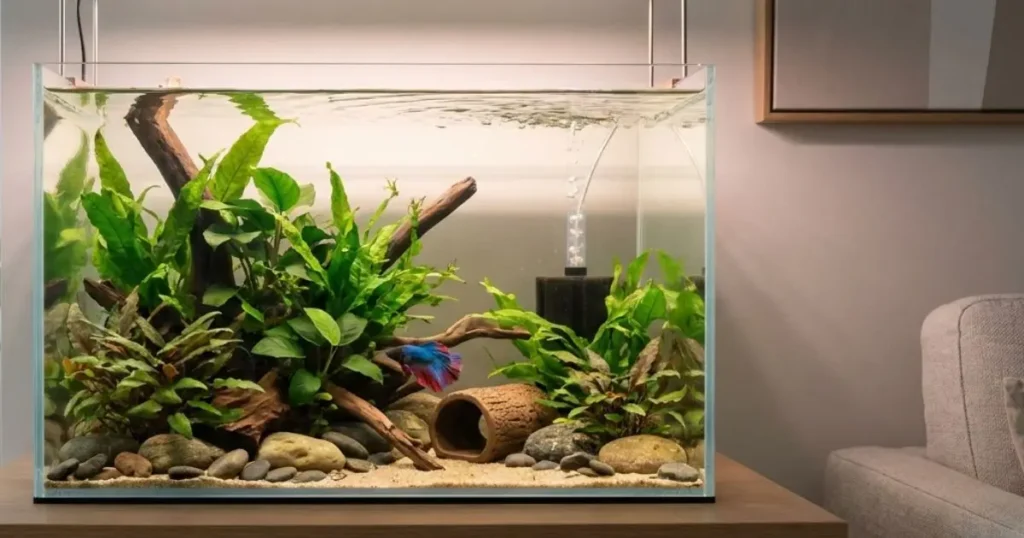
Improve the tank environment
- Make sure the tank is at least 5 gallons — smaller setups cause chronic stress
- Keep water temperature stable between 76–82°F
- Maintain proper filtration without creating strong currents (bettas prefer calm water)
- Add plants and hides to give your betta a sense of security and territory
Limit mirror use
- If you use a mirror for exercise, cap sessions at 2–3 minutes and do it no more than once a day
- Never leave a mirror propped against the tank unattended
Enrich the environment
Boredom can make bettas more reactive. Silk or live plants, caves, and floating decorations give them something to interact with beyond their own reflection or the edges of the tank.
When to Worry About Betta Fish Flaring
Most flaring is harmless, but there are situations where it warrants closer attention.
Watch for these red flags:
- Flaring that doesn’t stop even after the trigger is removed
- Physical injury to fins from repeated extended flares
- Accompanying signs of illness: white spots, bloating, torn fins with fraying edges, or visible parasites
- Sudden dramatic increase in flaring behavior in a fish that was previously calm
A sudden change in behavior — including more frequent flaring — is often the first indicator that something is off with the water or the fish’s health. Test your water parameters (ammonia, nitrite, nitrate, and pH) before assuming the cause is behavioral.
If the flaring comes with physical symptoms that don’t resolve after correcting the tank conditions, a visit to an aquatic veterinarian or consultation with a knowledgeable fish store is a reasonable next step.
FAQs About Betta Fish Flaring
Why is my betta fish flaring at me?
Your betta likely sees you as a large moving presence near his territory. This is common, especially when you approach the tank quickly or make sudden movements. It usually fades as your fish gets used to you. Some bettas never fully stop flaring at their owners — it’s a personality trait as much as anything else.
Is flaring a sign of stress?
It can be, but not always. Short, occasional flaring at a specific trigger is a normal stress response that resolves quickly. Chronic or prolonged flaring — especially without an obvious cause — is more likely to indicate ongoing stress from environmental factors like poor water quality, incorrect temperature, or an inadequate tank size.
Should I use a mirror for my betta fish?
Used correctly, yes — in moderation. A brief mirror session once a day can provide mental stimulation and physical exercise. The key is keeping it short (no more than 2–3 minutes) and never leaving the mirror in place unsupervised. Think of it as a controlled workout, not a permanent addition to the tank.
Can flaring harm my betta fish?
Extended or constant flaring can cause physical harm over time. The muscles involved are being held under tension, which is exhausting. Chronic overstimulation also elevates stress hormones, which weakens the immune system and makes the fish more susceptible to illness. Brief, infrequent flaring is fine — it’s prolonged sessions or constant triggers that cause the damage.
How do I know if my betta is flaring or sick?
Flaring is an active, deliberate posture — fins spread wide, gills open, body tense. A sick fish typically does the opposite: fins clamped, body curved or bloated, movements sluggish. If your betta is flaring with full color and responsive movements, he’s likely reacting to something in his environment. If the display is accompanied by lethargy, discoloration, or abnormal swimming, check your water parameters and look for signs of disease.
Final Thoughts
Betta fish flaring is rarely something to panic about. In most cases, it’s a healthy expression of instinct — your fish asserting himself the way nature intended.
The key is context. Brief, occasional flaring with a clear trigger is normal. Constant or prolonged flaring, especially alongside other symptoms, is a signal worth acting on.
Get the tank environment right — size, temperature, water quality, and visual barriers — and most flaring issues resolve on their own. Every species has its quirks, and bettas are no exception. If you’re weighing different pets or curious how betta care compares to other species, our Pet Comparison Tool breaks down behavior, temperament, and care needs side by side.