

Dog vs Cat: Which Pet Is Right for Your Lifestyle?
Table of Contents
Choosing between a dog and a cat is one of the most common questions for new pet owners. While both make amazing companions, they come with very different needs in terms of time, care, and lifestyle.
If you pick the wrong pet for your daily routine, it can quickly become stressful for both you and the animal. That’s why understanding the real differences between dogs and cats is essential before making a decision.
In this guide, we’ll compare dogs and cats based on lifestyle, maintenance, cost, and behavior to help you choose the pet that truly fits your life.
Quick Comparison
| Factor | Dog 🐶 | Cat 🐱 |
|---|---|---|
| Time Commitment | Requires daily scheduled time (walks, interaction) | Flexible, adapts to your schedule |
| Maintenance | Higher (grooming, training, outdoor needs) | Lower (self-grooming, indoor care) |
| Independence | Low – needs attention and companionship | High – comfortable being alone |
| Lifestyle Fit | Best for active and structured routines | Best for busy or flexible lifestyles |
| Space Needs | Needs more space (especially large breeds) | Ideal for apartments and small spaces |
| Cost | Generally higher over time | Generally lower |
| Exercise | Requires daily outdoor activity | Indoor play is usually enough |
| Training | Requires consistent training | Minimal training needed |
| Social Behavior | Highly social and interactive | More independent and selective |
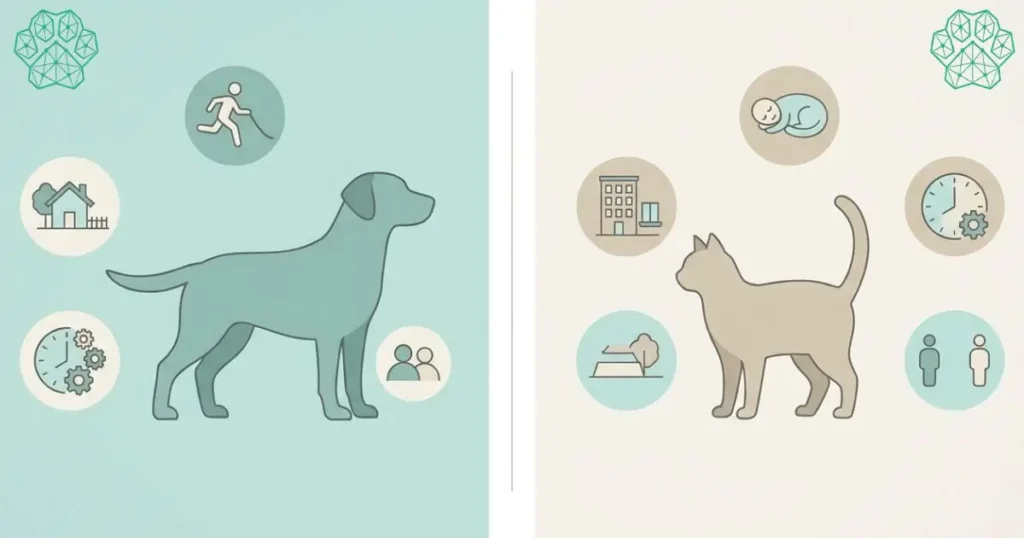
If you want a more detailed and personalized comparison, you can use our pet comparison tool to compare pets side by side.
Understanding the Core Differences Between Dogs and Cats
When you compare dogs and cats, you see two survival strategies. Both have lived with humans for thousands of years. But their biology is different. Knowing this helps you choose the right pet for your life.
The Evolutionary Background of Canines and Felines
The difference between cats and dogs comes from their past. Dogs come from wolves, which hunt in groups. This makes dogs want to be part of a group and have a leader.
Cats, on the other hand, come from solitary hunters. Their ancestors, like wildcats, hunted alone and defended their territory. This explains why cats seem more independent than dogs.
Natural Instincts and Temperament Variations
Cats vs dogs show different behaviors that affect daily life. Dogs see their family as their pack and want to be with them all the time. They look to their owners for guidance.
Cats, though, value their space and independence. They choose when to interact with you. Here are some key differences:
- Social Needs: Dogs need lots of social interaction, while cats prefer quieter times.
- Communication: Dogs use sounds and body language to communicate. Cats use subtle signs to mark their territory.
- Adaptability: Dogs rely on their owners in new situations. Cats like to explore and figure things out on their own.
Understanding these instincts is key to a happy home. By respecting these natural behaviors, you can have a better bond with your pet.
The Reality of Dog vs Cat Maintenance and Care
The difference between cats and dogs is clear when you look at their daily care. Both animals are great companions, but they need different amounts of care. Knowing what your pet needs is key to a happy life together.
Daily Grooming and Hygiene Requirements
Grooming is crucial for both dog vs cat maintenance. It keeps your pet clean and comfortable. Dogs need baths and brushing to manage their fur. Cats are more independent but still need your help to stay healthy.
Here are some important hygiene tasks:
- Brushing: Regular brushing prevents mats and reduces dander.
- Nail Trimming: Trimming claws is essential to prevent injury.
- Dental Care: Brushing teeth or using dental chews is vital for oral health.
- Litter vs. Walks: Cats need daily litter box cleaning, while dogs need walks.
Health Monitoring and Veterinary Needs
Regular medical care is vital for your pet’s long life. Both cats vs dogs need annual exams to catch health issues early. Your vet will tailor a care plan based on your pet’s needs.
Preventative Care for Dogs
Dogs face more risks, so preventative care is key. Keep up with heartworm prevention and flea treatments. Also, ensure they get core vaccinations like rabies and distemper.
Preventative Care for Cats
Even indoor cats need regular vet visits. They need core vaccines to protect against viruses. Watch for signs of illness, like changes in appetite or litter box habits, to catch health issues early.
Evaluating Your Daily Schedule and Activity Levels

Your daily routine is key to a great bond with a new pet. When you compare dogs and cats, you see they need different amounts of your time. Knowing this helps you make a home where your pet can flourish.
The Time Commitment of Dog Ownership
Dogs need lots of human interaction to be happy. You’ll spend a lot of time on walks, exercise, and training. Active engagement is essential for a dog’s health and happiness.
If you work long hours, you might need a dog walker or daycare. Without enough time, dogs can get anxious or destructive. Seeing dog ownership as a big commitment is important.
The Independence of Feline Companions
Cats are great for those who like a pet that’s more independent. They need love and play, but they’re okay on their own more often. Feline independence lets them manage their time while you’re busy.
- Cats don’t need walks for exercise.
- They’re fine spending time alone during the day.
- Litter boxes make cleaning up easy.
Matching Pet Energy to Your Work-Life Balance
Choosing the right pet depends on your energy and daily life. If you love being active, a dog might be perfect. But if you like a calm home, a cat could be better.
Your cat vs dog lifestyle choice should match your daily care ability. By checking your schedule, you make sure your pet fits well into your life. A balanced choice means a happy, stress-free life for you and your pet.
Social Needs and Companionship Styles

Choosing between a dog or a cat means understanding their social language. Each pet shows love and needs in its own way. Learning these cues helps you connect deeply with your pet.
How Dogs Express Affection and Loyalty
Dogs love to be around their people and show it through actions. They follow you everywhere and rest their head on your lap. A happy dog wants to play, wag its tail, and look at you.
They see you as part of their family. So, they get excited when you come home. They need regular interaction to feel secure and happy.
Understanding the Subtle Language of Cats
Cats show love in quieter ways than dogs. They might not always greet you with excitement. But, they trust you with slow blinks and head-butting.
They might sit near you but not on you. This shows they value their space but still want to be close. Learning these signs helps you understand your cat’s love.
The Impact of Household Size on Pet Happiness
The size of your home affects your pet’s happiness. Dogs in big families love the activity and people. But, they also need dedicated one-on-one time to feel secure.
Cats prefer quieter places to hide from too much noise. In big homes, make sure they have a quiet spot. Finding the right balance is key to a happy home for both you and your pet.
Financial Considerations for Pet Ownership
Before deciding between a dog or a cat, think about the long-term costs. Owning a pet means a big financial commitment. Both dogs and cats need a regular budget for care and happiness.
Budgeting for Food, Supplies, and Toys
Every day, you’ll spend money on your pet’s needs. Good food is key to avoiding health problems. You’ll also need supplies like bedding and litter boxes.
Here are some monthly costs to consider:
- Premium pet food and treats
- Waste management supplies (litter or biodegradable bags)
- Enrichment toys and scratching posts
- Grooming tools and shampoos
Long-term Veterinary Costs and Pet Insurance
Regular vet visits are a must. These include annual exams and shots. Pet insurance can help with the costs of both routine and emergency care.
“According to the ASPCA, pet ownership comes with both expected and unexpected costs, especially for medical care.”
Pet insurance can help reduce the impact of large veterinary bills. Without it, unexpected expenses can quickly become overwhelming. Choosing a plan that fits your pet’s needs can make a big difference over time.
Hidden Expenses of Pet Parenting
First-year surprises can include training, pet-sitting, and home repairs. Travel costs can also add up. Plan ahead to avoid financial stress.
Proactive planning helps you enjoy your pet more. A small monthly savings can make a big difference. It lets you focus on your pet, not money worries.
Living Space and Housing Requirements
The size of your home plays a big role in choosing a pet. When you think about cat vs dog lifestyle, your home’s size matters a lot. It’s important to make sure your home is right for both you and your pet.
Apartment Living: Which Pet Thrives in Small Spaces?
In small apartments, picking the right pet is key. Cats are great for small spaces because they like to climb. Adding cat trees or shelves helps keep them happy without needing a lot of room.
Dogs, on the other hand, need more space unless you can take them out often. Some small dogs can live in apartments, but big or energetic dogs might get bored. Choosing the right pet for your space is important.
The Importance of Outdoor Access and Yards
A yard is a big plus for pets that like to move around. Dogs need a safe place to play and exercise. A fenced yard is perfect for dogs that have lots of energy.
Cats, though, like their homes to be cozy. Some cats go outside, but most are safer inside. Think about whether you want a pet that needs to go outside or one that’s happy indoors.
Pet-Proofing Your Home Environment
Getting your home ready for a pet is crucial for their safety. Pet-proofing stops accidents and keeps your stuff safe from pets’ natural behaviors. Here are some important steps:
- Secure electrical cords to prevent chewing hazards.
- Store toxic household cleaners in high, locked cabinets.
- Remove poisonous houseplants that could harm curious pets.
- Use baby gates to restrict access to dangerous areas like kitchens or stairs.
Doing these things early makes bringing home a pet easier. A safe home lets your pet explore without worry. It’s a big part of being a good pet owner.
Training and Behavioral Expectations
Understanding pet behavior is crucial for new owners. Whether you’re choosing between a dog vs cat for beginners guide or setting up your home, knowing how to shape your pet’s habits is key. Training helps build a strong bond and respect between you and your pet.
The Fundamentals of Dog Obedience Training
Dogs need structure and clear leadership. Use positive reinforcement to reward good behavior with treats, praise, or play. Consistency is key when teaching commands like “sit,” “stay,” or “come.”
- Keep training sessions short and frequent to maintain focus.
- Use high-value rewards to motivate your dog during learning.
- Practice in different environments to ensure your dog listens everywhere.
Managing Feline Behavior and Litter Box Habits
Cats are naturally clean, making litter box training easy. Most kittens know how to use a box, but it must stay clean and easy to access. If your cat avoids the box, it might be a health issue or dislike the litter.
Providing the right outlets for natural instincts is also important. Scratching posts help protect your furniture and satisfy your cat’s need to stretch and mark territory. Early redirection prevents unwanted habits from forming.
Addressing Common Behavioral Challenges
Every pet will test boundaries, and knowing how to react is part of the dog vs cat for beginners learning curve. Dogs may bark too much or jump on guests, while cats might play too aggressively or be active at night. Patience is key when correcting these behaviors.
Instead of punishment, focus on redirection and managing the environment. If your pet has persistent issues, seek help from a professional trainer or vet. Early action keeps your home peaceful for everyone.
Assessing Your Personal Personality and Preferences
Choosing between a dog or a cat for your home means looking at your daily habits and personality. Your lifestyle is key to a good relationship with a pet. Think about your energy levels and what you like in a home to create harmony.
Are You an Active Adventurer or a Homebody?
Your activity level shows which pet is right for you. If you love hiking and parks, a dog might be perfect. Dogs need to move and enjoy being active.
If you like quiet nights at home, a cat could be better. Cats are calm and don’t need to run around all the time. Choosing a pet that matches your energy ensures happiness for both.
Patience Levels and Tolerance for Mess
Thinking about a dog or cat means looking at your patience and mess tolerance. Dogs need lots of training and can make messes. You must be ready for accidents and chewed things.
Cats are easier in some ways but can still make messes. They might scratch furniture or shed a lot. Understanding your mess tolerance helps you enjoy your pet more.
Finding the Perfect Match for Your Household
The right pet for you depends on how you can change your home. Think about these things to decide:
- Time Availability: How many hours can you spend with your pet every day?
- Social Needs: Do you want a pet that’s always with you or one that likes alone time?
- Living Environment: Is your home good for a pet that’s very active or very calm?
Take your time to think about these points and what you’re comfortable with. When your lifestyle and your pet’s needs match, you’ll have a great friendship. Making the right choice means your home will be filled with joy and respect.
Conclusion
Choosing a new pet is a big decision. It depends on your current life stage and how much time you have. The right pet, whether a dog or cat, needs consistent care and love from you.
Think about your daily habits. If you love being active, a dog might be perfect for you. But if you prefer a calm home, a cat could be the better choice. Knowing your routine helps pick the best pet for you.
Don’t forget about the cost of pet care. You’ll need to budget for food, vet visits, and insurance. This ensures you can care for your pet for their whole life.
Your pet will change your home for years to come. Consider how much patience and interaction you want. The right pet brings happiness to your life. Talk to friends or animal shelters to learn more about pet care.
If you want a clearer comparison, you can use our pet comparison tool to compare dogs and cats side by side.
If you’re still unsure, you can also try our pet matchmaker tool to get personalized pet recommendations based on your lifestyle.
FAQ
When deciding between a dog vs cat, what are the most important factors to evaluate?
First, think about your daily routine, living space, and how much money you can spend. Dogs need lots of exercise and attention, while cats are more independent. Cats are better for small homes or busy people. Choosing between a dog and a cat depends on several aspects of your lifestyle. If you like active training and walks, a dog might be right. If you want a quiet, low-maintenance pet, a cat could be better.
What is the primary difference between cats and dogs regarding their social needs?
Dogs see you as their pack leader and show loyalty through actions like wagging their tail. Cats, on the other hand, show love in quieter ways like purring or slow-blinking.When comparing dogs and cats, dogs need more of your emotional energy. Cats are happy to share your space without needing constant attention.
In terms of dog vs cat maintenance, which pet requires more daily effort?
Dogs need more daily effort because they require walks, potty breaks, and training. You might need special gear like a Freedom No-Pull Harness or KONG toys to keep them busy.Cats are mostly self-sufficient, needing only a clean litter box and good food. They still need regular play to stay healthy.
If I am looking at a dog vs cat for beginners, which is usually recommended for first-time owners?
Experts often recommend cats for beginners because they are naturally litter-trained. Dogs, like a Labrador Retriever, can also be great if you’re ready for training classes.
How do the long-term costs compare dogs and cats for a typical household budget?
Dogs can cost more over time due to food, grooming, and boarding. The ASPCA says owning a dog costs more than a cat, including vet bills. Pet insurance can help with unexpected costs for either pet.
Which animal is better suited for a busy cat vs dog lifestyle if I work long hours?
For long hours away, a cat is a better choice. Cats are fine with you being away and don’t get anxious like dogs do. If you have a dog, you might need a dog walker or daycare.
Can I have a dog in a small city apartment, or are cats vs dogs better for urban living?
Cats are great for small apartments because they use vertical space. Some dogs can also live in small homes if they get enough exercise. Choose a breed that fits your space and needs.Make sure your balcony is pet-proofed and wires are secure, no matter the pet.
What should I know about the difference between cats and dogs regarding health monitoring?
Both pets need yearly check-ups, but their health needs differ. Dogs need vaccinations and flea prevention, while cats need core vaccines and dental care. Watch their bathroom habits and appetite for signs of illness.